
Multi-Carrier IoT Management
Achieving Operational Control Above the Carrier Layer

Powering Carrier-Agnostic Operations for Global Enterprises
Why Enterprise Scale Requires Multi-Carrier IoT Management
Multi-carrier IoT management replaces single-network dependency with resilience and choice.
For enterprise network architects and IoT program managers, scaling a global deployment is rarely a challenge of choosing a single network operator. True scale requires resilience, and resilience demands options. When your connected infrastructure relies on a single SIM, a local network failure or a regional blind spot can stall critical business operations.
To prevent these disruptions, large enterprises are increasingly adopting a multi-network IoT strategy.
Managing multiple mobile network contracts, distinct vendor portals, and fragmented data formats introduces massive operational complexity. True efficiency requires more than a standard connectivity management platform provided by a single carrier. It requires an authoritative, neutral orchestration layer that integrates and governs your entire ecosystem from above.

Simetric: A Neutral Orchestration Layer for Carrier-Agnostic IoT
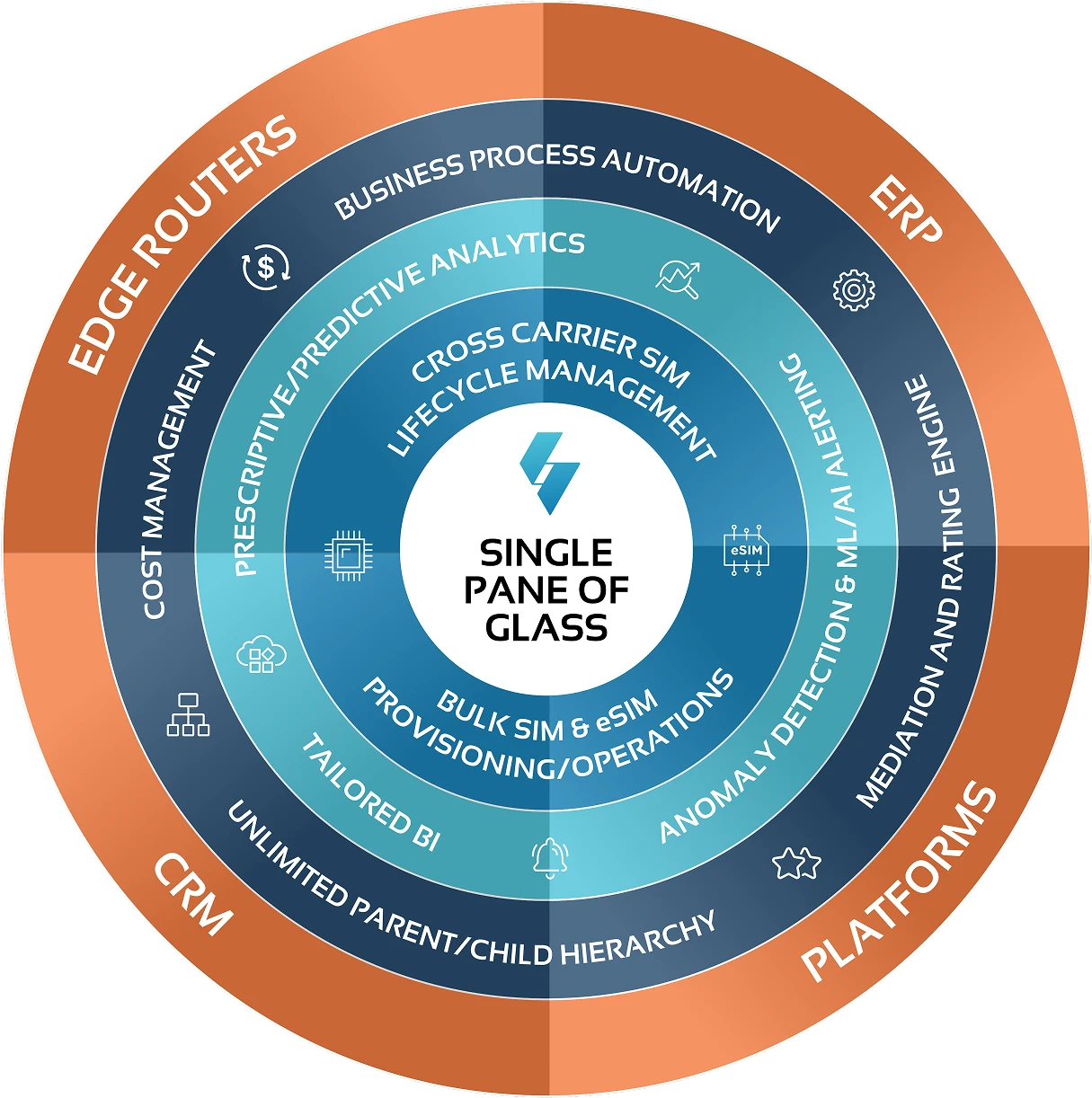
Simetric acts as a neutral enterprise orchestration layer and operational control plane that sits cleanly above carriers, connectivity platforms, and device types. Simetric does not sell connectivity, SIMs, or eSIMs. Instead, it provides a single system of record that unifies data from over 300 global carriers and 1,200+ normalized APIs into a single, streamlined interface. Because that layer sits above the carrier relationship rather than inside any one of them, an operator can execute a change across any carrier in the estate in a single session, rather than working portal by portal.
By decoupling the operational control plane from the underlying network infrastructure, Simetric delivers the kind of unified operational control enterprises associate with IoT MVNO management, without Simetric ever taking on a carrier role itself, and applies that same carrier-agnostic governance across every network in the estate.
Whether your estate uses physical SIMs, modern remote SIM provisioning, or private cellular networks, Simetric normalizes the incoming real-time data, creating a consistent language for your enterprise tools. This infrastructure-grade approach turns technical capability into operational reality, allowing you to scale safely, deliberately, and repeatedly.
Key Capabilities for Effective Multi-Carrier Management
Implementing a successful multi-carrier strategy requires deep operational visibility and policy-validated workflows. Enterprise network architects need their management platform to deliver a specific set of capabilities to achieve real cost efficiency and risk reduction.
Key capabilities include:

Unified Remote SIM Provisioning
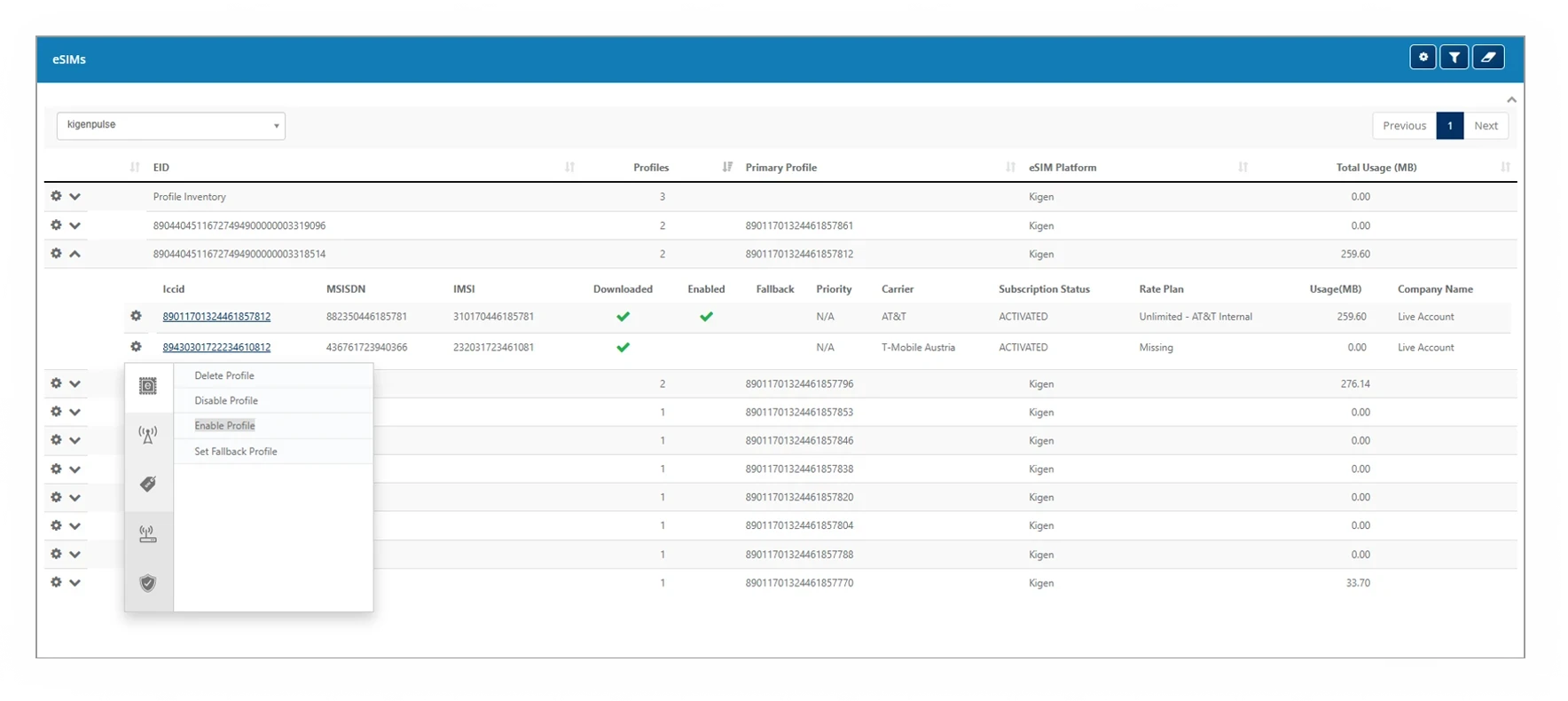
Simetric coordinates eSIM lifecycle steps across profile vendors and carriers, giving teams shared operational context and preventing stranded profiles that require expensive field service visits.

Real-Time Data Normalization
Simetric ingests telemetry from disparate networks and normalizes it instantly, eliminating blind spots and supporting compliance and auditability across mixed connectivity environments.

Policy-Enforced Cost Efficiency
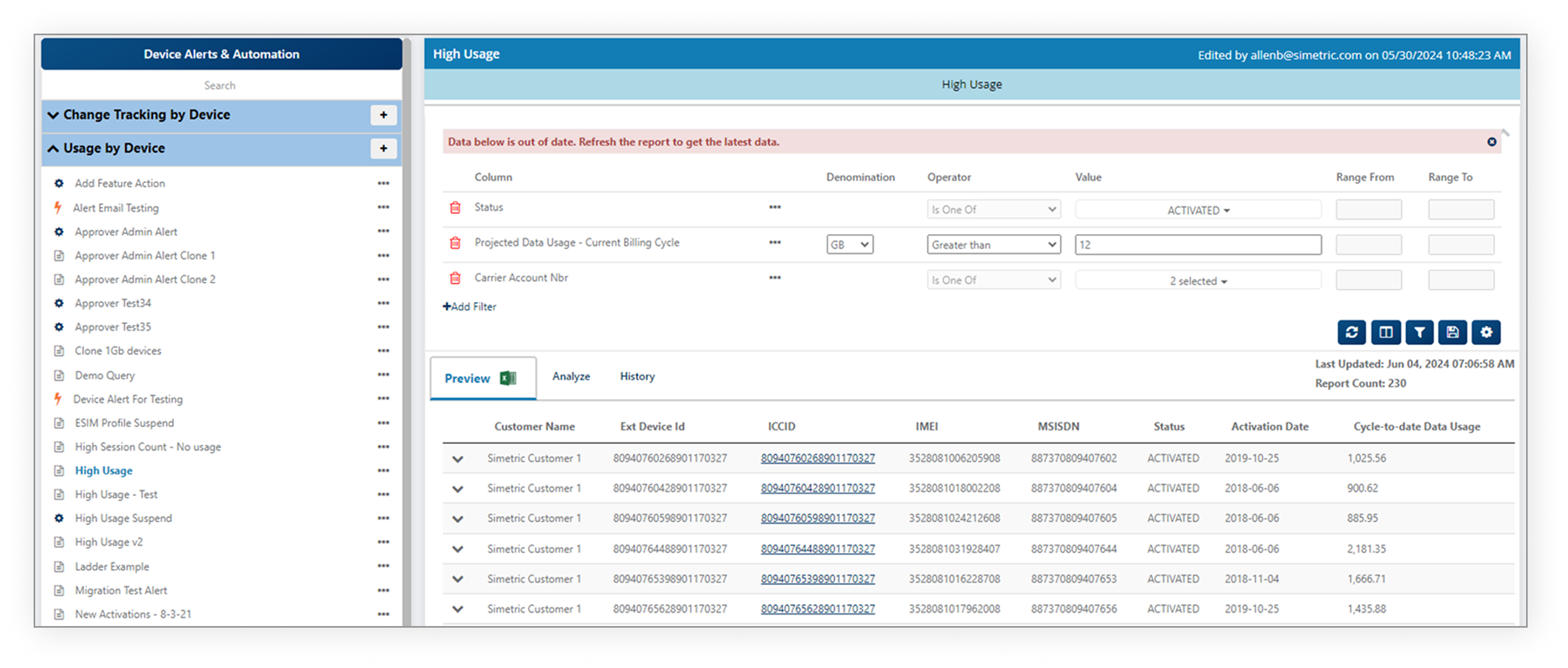
Simetric supports if-this-then-that workflows that automatically adjust rate plans or trigger alerts, protecting the operating budget from unexpected overage fees.
Related IoT & Edge Services
Connectivity Management Platform
Unified control across every carrier relationship.
Explore Connectivity ManagementSingle Pane of Glass (SPoG) Management
One unified view across devices and carriers.
Explore SPoG ManagementeSIM Orchestration
Orchestrate eSIM across every carrier and eIM.
Explore eSIM OrchestrationThe Operational Reality of Multi-Network IoT
In theory, achieving global coverage sounds straightforward: deploy devices equipped with multi-carrier SIM cards or multi-IMSI SIMs to maintain connectivity across borders, and let the device switch to an alternative network operator when a primary connection fails.
In practice, executing this at scale is highly complex. Without a centralized system to monitor and control these transitions, enterprise teams face severe operational friction. Network architects routinely deal with data reporting inconsistencies: one carrier might report usage in hourly kilobytes, while another provides daily megabytes.
When your data is fragmented, calculating true operational cost becomes a manual, error-prone task. This gap often leads to bill shock from unmanaged usage, where a group of roaming devices gets stuck on an expensive non-partner network, driving up costs before anyone notices.
To achieve sustained adoption of these technologies, organizations need a centralized framework that normalizes this telemetry and turns raw IoT connectivity into a predictable, well-governed system.

Why Traditional Connectivity Management Platforms Fall Short
Most technical leaders are familiar with traditional connectivity management platforms, such as Cisco IoT Control Center or carrier-proprietary interfaces, and Simetric isn’t here to replace them. Your existing connectivity platforms stay responsible for network rules and local signaling; Simetric sits above them to coordinate what happens across all of them at once, which is a different job than any single carrier’s tool was built to do.
That said, those tools function well only when every device sits on the same carrier within a single geography. A traditional connectivity management platform is optimized to manage the carrier’s own business: subscriber relationships, data bands, billing cycles. It isn’t designed to handle your internal enterprise workflows or integrate with your broader IT service management infrastructure, and once you scale internationally, that gap becomes the multiple portal problem: engineering and help desk teams forced to log into five or ten different carrier portals just to troubleshoot a single device or verify a rate plan change.
That fragmentation creates real visibility blind spots beyond the traditional enterprise edge, increasing decision latency and compounding administrative overhead.
According to the IoT Analytics CMP Market Report 2024, the cellular IoT mobile operator landscape is shifting as enterprises demand greater flexibility and less vendor lock-in. Maintaining operational control at that scale means looking beyond single-carrier tools toward a strategy that prioritizes carrier-agnostic governance above them, not instead of them.
What the Carrier Platform Covers, and What Simetric Adds Above It
To understand where enterprise buying decisions are actually won or lost, it helps to separate what a single-carrier CMP already does well from what only becomes possible once an orchestration layer sits above it.
The identity model is the one that matters most. A connection-centric platform ties an asset’s history to whichever SIM it happens to be using today; a device-centric model keeps that history with the asset itself, no matter how many times the underlying connection changes.
| Operational Capability | What the Carrier Platform Covers | What Simetric Adds Above It |
| Identity Model | Connection-centric, tied to a specific rate plan or SIM | Persistent, device-centric identity that holds across every carrier |
| Data Visibility | Siloed to that one network operator or partner network | Normalized real-time data across 40+ platforms and 300+ carriers |
| Workflow Automation | Basic carrier-specific alerts and rules | Multi-vendor business process automation across the estate |
| Enterprise Integration | Limited or custom-built API work per portal | Out-of-the-box integration with tools like ServiceNow and SAP |
| Cost Optimization | Manual rate-plan changes, one carrier portal at a time | Automated, policy-driven rate-plan switching across every vendor |
| eSIM Lifecycle Control | Controlled separately by each profile provider | Unified orchestration across physical SIM, eSIM, and multi-IMSI assets |
Bridging the IT vs. OT Gap in Enterprise Operations
One of the greatest friction points in large-scale deployments is the visibility gap between Operational Technology (OT) network teams and Information Technology (IT) help desk teams. It isn’t really a technology problem so much as a “nobody’s looking at the same thing” problem.
When a connected asset stops reporting in the field, the help desk usually relies on tools like ServiceNow that have no visibility into cellular network status, and that gap turns a routine fault into finger-pointing between vendors and internal teams while nobody yet knows what actually broke.
Simetric solves this by acting as an operational translator between raw cellular connectivity and core enterprise systems. Feeding real-time network telemetry directly into tools like ServiceNow gives human teams immediate visibility into whether a device failure is a hardware malfunction, a local network outage, or a profile misconfiguration, right where those teams already work.
This deep integration aligns with the broader goals of the GSMA Connected Living initiative, which emphasizes industry collaboration and secure, unified enablers to support long-term IoT growth. It also prepares infrastructure for agentic AI: consistent, normalized telemetry is the precondition automated systems need to detect anomalies reliably, rather than acting on the noisy, inconsistent data most enterprise environments produce today.
This unified approach keeps decision-making authority with the enterprise. The Gartner Magic Quadrant for Managed IoT Connectivity Services consistently highlights the need for enterprises to manage the complexity of global, multi-region environments, a requirement Simetric addresses by providing a vendor-neutral orchestration layer above them.
Client Success in Action
Simetric gave us total visibility over 40,000 remote endpoint SIMs in 3 weeks.
VP of IT, Fortunte 500 Energy Utility
35% Reduction in Unused SIM Costs
90% Faster Anomaly Detection
FAQs About Multi-Carrier IoT Management
How does a neutral orchestration layer differ from a multi-IMSI SIM card solution?
A multi-IMSI SIM card is a hardware-level or profile-level capability that allows a device to store multiple network identities and switch between carriers, often based on signal strength or regional availability. A neutral orchestration layer, like Simetric, operates at the software and operational level above the SIM itself.
Simetric does not sell the SIM or the connectivity. Instead, it aggregates, normalizes, and governs the data and workflows from those multi-IMSI cards alongside your physical SIMs, eSIMs, and various carrier accounts, providing a single system of operational truth.
Can we use Simetric if we already have an existing connectivity management platform?
Yes. Simetric doesn’t replace your existing connectivity management platforms; it enriches and unifies them. Your existing connectivity platforms, such as Cisco IoT Control Center, stay responsible for handling backend network rules and local signaling. Simetric sits above these native engines, collecting their fragmented data, normalizing it, and connecting it directly to your internal enterprise workflows and IT tools, so there’s no need to manually log into multiple carrier portals.
How does multi-carrier management protect against bill shock?
Bill shock occurs when devices switch to non-partner networks or consume data beyond their plan thresholds without real-time oversight. Simetric tracks real-time data usage across all active networks and applies centralized policy controls. Through automated business process automation, the platform can automatically adjust rate plans, flag anomalous data consumption, or suspend connections based on corporate policies before the end of the billing cycle.
What industries benefit most from a carrier-agnostic IoT strategy?
Asset-intensive industries operating critical infrastructure get the most value from this approach. This includes utilities managing smart meters across vast territories, oil and gas companies monitoring remote extraction sites, manufacturing environments with distributed supply chains, and connected logistics operators tracking fleets across multiple international borders. These environments require continuous global coverage and cannot afford the operational risk of relying on a single network provider.
How does this approach improve enterprise cybersecurity?
When your connectivity management is fragmented across multiple carrier portals, enforcing a consistent security posture is highly challenging. A device-centric orchestration layer ensures that every connected asset carries a persistent identity independent of its current network operator. This persistent visibility allows compliance and security leaders to monitor for anomalies, enforce zero-trust policies, and audit network access uniformly across your entire global estate.
Does adopting an orchestration layer mean we have to rewrite our device-level code?
No. Because Simetric operates as a horizontal control plane using a unified API layer above the carrier management infrastructure, it hides the underlying complexity from your enterprise systems. It translates the disparate languages of hundreds of global carriers into a consistent format, meaning your IT tools and internal applications can interact with your device fleet through a standardized interface without requiring custom, carrier-specific firmware modifications at the device level.