
eSIM & SIM Lifecycle Management
One control plane for every SIM and eSIM in your enterprise, across every carrier and standard, from procurement to decommissioning.

Powering SIM and eSIM Governance for Global Enterprises
The Operational Reality of Scaling SIM Lifecycle Management
SIM & eSIM lifecycle management gives enterprises one centralized control plane to govern every device from procurement to retirement.
Enterprise operations depend on distributed digital infrastructure, thousands of connected devices running critical automated tasks around the clock. Scaling that architecture is rarely a hardware problem, and it isn’t a cellular technology problem either. It’s a governance problem: enterprises adopt eUICC hardware and modern eSIM profiles successfully in a pilot, then stall once they try to move that same environment into production, because multiple carriers run disconnected systems and no internal team can orchestrate all of them safely at once.
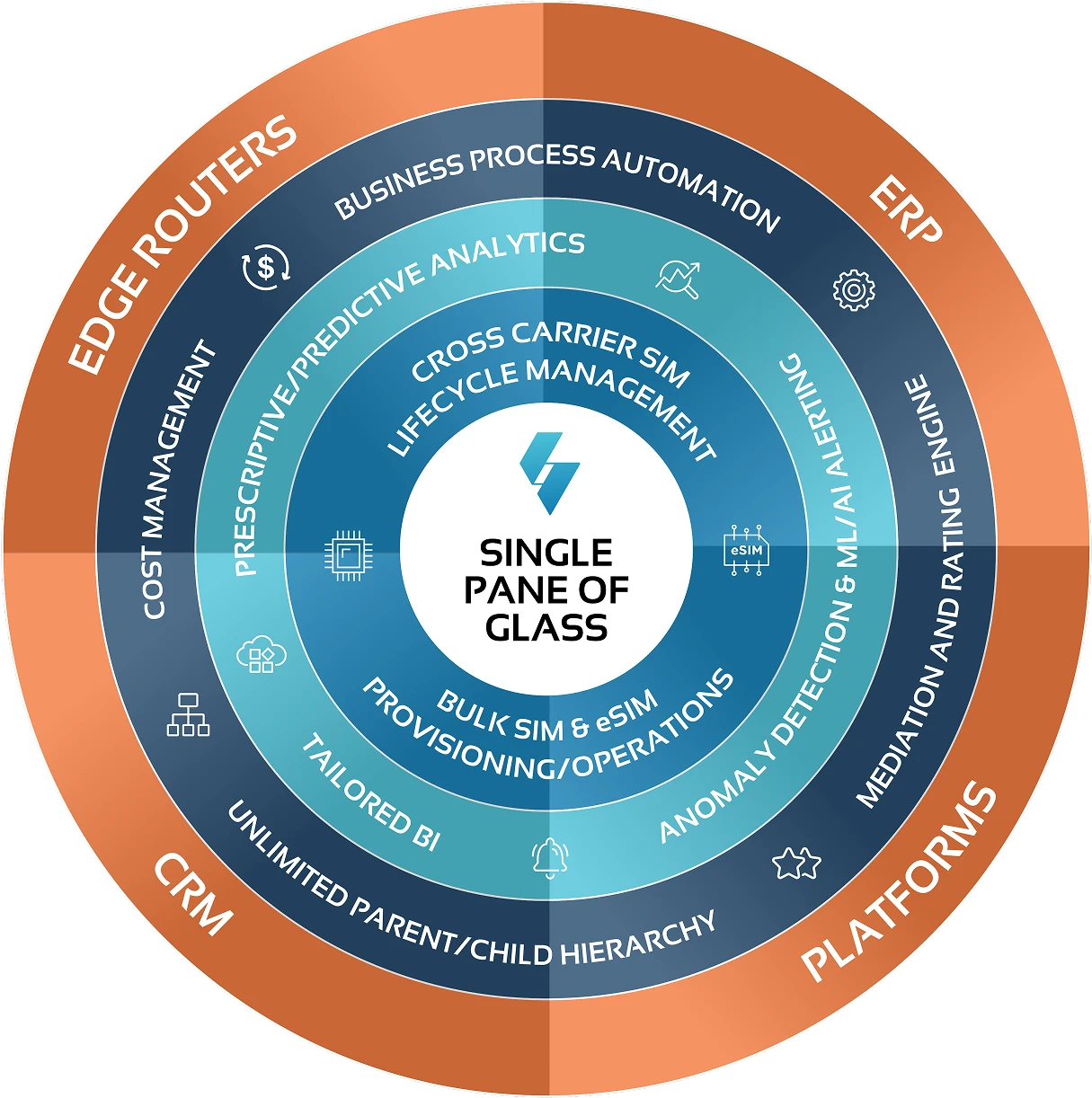
Simetric operates above that fragmentation as an enterprise orchestration layer, built around GSMA SGP.32, the current standard governing enterprise-scale remote SIM provisioning, and coordinates every stage of the SIM lifecycle through one centralized operational control plane. Because that governance sits above the carrier layer rather than inside any single relationship, an operator can execute a policy change across every carrier and profile type in the estate in a single session, rather than working through each vendor portal one at a time.

Why End-to-End SIM Management Matters for Governance
Enterprises running thousands of physical SIMs simultaneously carry real administrative overhead, and the exposure starts earlier than most teams expect. It begins at procurement and runs through the entire operational lifecycle. Without a central system, teams end up updating assets by hand across disconnected vendor portals, which introduces regulatory risk and breaks the change-management rules most enterprises already have on paper.
Simetric solves that tracking problem directly, providing one system of record that monitors every asset from procurement through decommissioning. That includes activating SIMs across regions in a policy-compliant way and enforcing enterprise security requirements consistently, so visibility gaps and manual configuration errors stop being an accepted cost of scale. Coordinating that across every carrier is also what reduces the decision latency that typically delays large rollouts.
What Simetric Adds at Each Lifecycle Stage
Across the SIM and eSIM lifecycle, Simetric adds a consistent operational layer above every carrier portal.
At each stage, Simetric adds:

SIM Procurement
Automated inventory tracking across every carrier from day one.

Activating SIMs
Unified, policy-validated activation workflows across all carriers.


Device Retirement
Coordinated, automated decommissioning across the full estate.
Related IoT & Edge Services
eSIM Orchestration
Orchestrate eSIM across every carrier and eIM.
Explore eSIM OrchestrationeSIM Management Platform
Provisioning, activation, and lifecycle control.
Explore eSIM ManagementSingle Pane of Glass (SPoG) Management
One unified view across devices and carriers.
Explore SPoG ManagementRemote SIM Provisioning and eUICC Management
Modern deployments increasingly run on eUICC hardware, which is what makes remote SIM provisioning possible in the first place: changing a device’s carrier profile over the air, without a physical swap or a truck sent to the field.
The current standard governing that shift is GSMA SGP.32, built specifically for IoT and enterprise-scale remote provisioning. Many deployments still run on the earlier GSMA SGP.02 specification, the M2M provisioning model that predates SGP.32 and that Simetric continues to support alongside it, since most enterprise fleets migrate gradually rather than switching every device over at once.
Leading silicon manufacturers build the hardware for these models, including modules from STMicroelectronics and operating systems from Kigen. Profile delivery and data security across that hardware layer come from providers like Thales.
Simetric coordinates across this ecosystem rather than replacing any piece of it. The platform governs multi-vendor profile states consistently, whether a device is running SGP.32 or the earlier SGP.02 model, so a mixed eUICC environment is auditable as one system instead of tracked separately by standard. Simetric doesn’t sell network connectivity. It ensures that orchestration stays consistent across whichever technical ecosystem a device happens to run on.

What Carrier Portals Cover, and What Simetric Adds Above Them
Carrier portals stay the system of record for what happens on their own network. Simetric sits above them, giving operations and compliance teams one consistent view of every SIM and profile across every carrier in use, instead of reassembling that picture from separate systems after the fact.
| Operational Phase | What Carrier Portals Cover | What Simetric Adds Above Them |
| SIM Procurement | Manual logging within a single carrier’s system | Automated inventory tracking across every carrier from day one |
| Activating SIMs | Isolated to that carrier’s own network | Unified, policy-validated activation workflows across all carriers |
| Profile Provisioning | Vendor-specific tools tied to one ecosystem | Multi-vendor, standards-based eUICC orchestration |
| Device Retirement | Manual deactivation, carrier by carrier | Coordinated, automated decommissioning across the full estate |
How Automation Protects the Connected Device Lifecycle
An unmonitored endpoint is a real liability. A device that’s been retired or misconfigured but is still transmitting can rack up unpredictable costs before anyone notices, and catching that requires real-time policy checks, not a periodic audit.
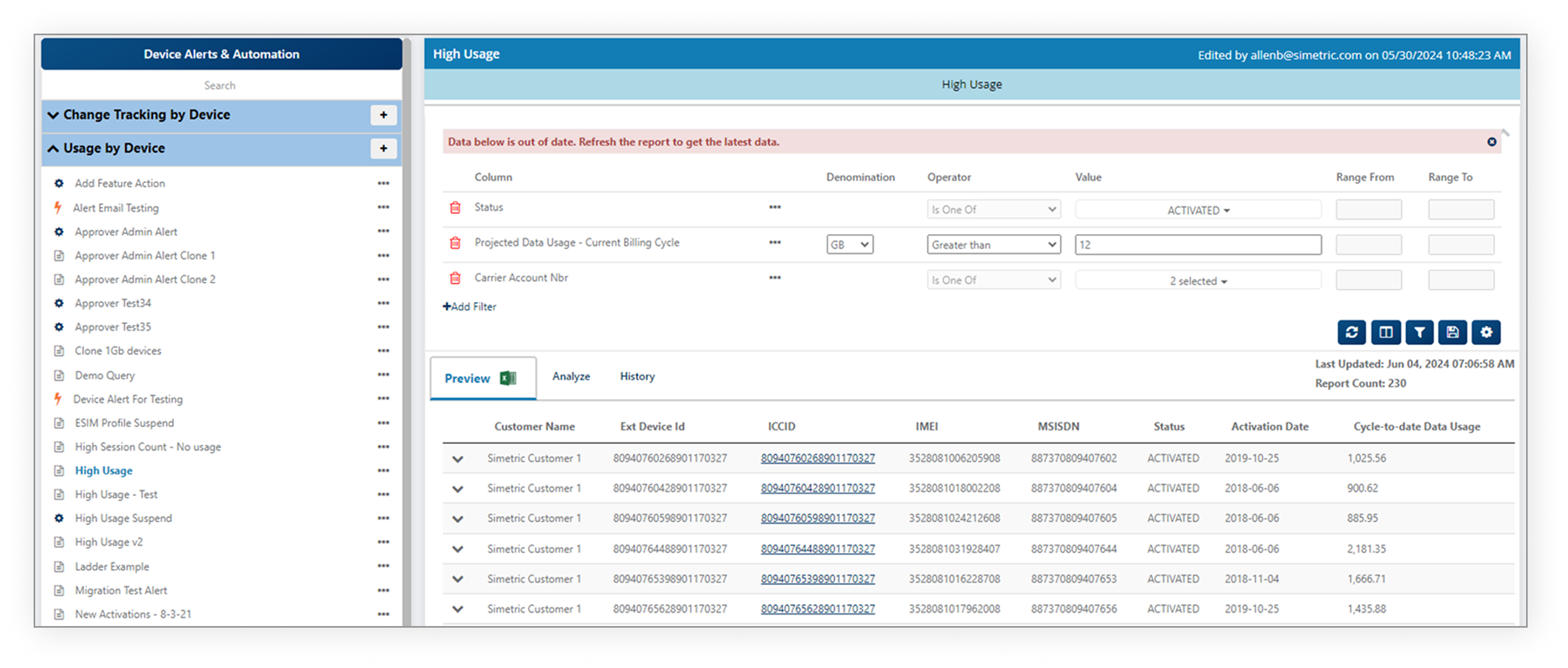
Simetric builds automated policy validation into standard operational workflows, tracking data behavior continuously and flagging deviations from established guardrails as they happen. That protects the infrastructure investment itself and prevents the kind of surprise billing overage that shows up on a statement weeks after the fact. It’s what moves an organization from passive tracking dashboards to active, rule-based coordination, so consistency holds across the entire hardware footprint rather than only the parts someone happened to check.
Client Success in Action
Simetric gave us total visibility over 40,000 remote endpoint SIMs in 3 weeks.
VP of IT, Fortunte 500 Energy Utility
35% Reduction in Unused SIM Costs
90% Faster Anomaly Detection
FAQs About SIM & eSIM Lifecycle Management
What does end-to-end lifecycle management mean for an enterprise SIM footprint?
End-to-end management covers a device’s entire useful life, from manufacturing and procurement through active deployment, profile changes, and eventual safe decommissioning. Most enterprises still manage these stages with disconnected spreadsheets and separate carrier tools, which creates real operational visibility gaps.
Simetric coordinates all of it through a single control plane, tracking the structural history of every SIM and managing physical modules and virtual eUICC profiles under the same policy framework. That consistency removes the tracking errors that show up most often during state transitions.
How does Simetric complement existing remote SIM provisioning architectures?
Remote provisioning platforms handle the mechanics of sending operator profiles over the air, and they do that job well within their own scope. What they don’t do is connect to the broader enterprise workflows those changes actually depend on: approvals, dependency checks, change-management sign-off.
Simetric sits above those individual provisioning layers, coordinating the organizational and technical steps that surround a profile change so it complies with enterprise policy before it happens, not just after.
Why does multi-vendor support matter when activating SIMs globally?
Global operations rarely run on a single telecom vendor. Regional coverage limits and data residency requirements make that fragmentation unavoidable, and when every team uses separate vendor tools, activation mechanics stop being consistent from one region to the next, which slows every rollout down.
Simetric normalizes the activation process across vendors, so teams use one workflow to configure assets anywhere, cutting training overhead and removing the latency that comes from switching tools by region.
What’s the difference between standard SIM management and eUICC management?
Standard management covers traditional physical SIMs, each holding a single permanent operator identity that has to be physically replaced to change providers, which is expensive at scale. eUICC technology replaces that with a rewritable secure element capable of storing multiple network profiles at once.
Managing eUICC means tracking active and inactive profile states, not just a single fixed identity. Simetric governs both traditional card lifecycles and modern eUICC states under one system of record, whichever hardware generation a given device happens to run.
How does lifecycle governance reduce risk during device retirement?
Retiring an asset improperly creates real exposure. A SIM left active after a device is decommissioned can be exploited for unauthorized access, or simply accumulate charges no one is tracking anymore.
Simetric automates the decommissioning process, cross-referencing device status against carrier records to confirm a profile is fully deactivated at retirement. That closes both the security gap and the billing one in the same step.
Can Simetric integrate with legacy SIM databases and internal ERP systems?
Yes. Simetric is built to sit alongside existing corporate infrastructure, exposing structured, real-time asset data through standard integration paths rather than requiring a rip-and-replace of what’s already in place. That keeps inventory, compliance, and financial systems synchronized automatically, without manual data duplication across teams.
How does Simetric help enterprises avoid carrier lock-in?
Carrier lock-in happens when switching providers is too operationally painful to justify, and replacing thousands of physical SIMs in the field is exactly that kind of cost. It’s what pushes enterprises into accepting contract terms they wouldn’t otherwise take.
Simetric removes that friction by coordinating over-the-air profile updates and the lifecycle steps required to change providers, giving a business the freedom to adjust its sourcing strategy based on performance and cost rather than switching cost.