
IoT Data Lake for Distributed Networking and Operational Intelligence
Turning Distributed Data Into Operational Understanding

Powering Operational Intelligence for Global Enterprises
How the Distributed Networking Data Lake Turns Telemetry Into Operational Understanding
Collecting more telemetry has never been the challenge. Enterprises already capture data from devices, carriers, and networks at scale through enterprise IoT device management. The real challenge is understanding how those systems behave together across hybrid terrestrial and satellite environments. The Distributed Networking Data Lake provides that foundation by connecting telemetry to lifecycle workflows, operational decisions, and enterprise governance.
As distributed networking expands, organizations need more than analytics tools or cloud storage. They need an intelligence layer aligned to lifecycle governance that transforms device and network signals into operational context.
The Distributed Networking Data Lake serves as the historical intelligence layer of the Simetric platform, enabling orchestration, SPoG visibility, and lifecycle governance across distributed device environments. Turning distributed telemetry into operational intelligence is why enterprises choose Simetric.
What Is an IoT Data Lake for Distributed Networking?
Collecting data from distributed networks is straightforward. Turning that data into operational clarity is not.
As deployments grow, enterprises accumulate telemetry from carrier portals, orchestration systems, satellite and terrestrial networks, device platforms, and internal monitoring tools. Each source offers insight, yet none provides full context. Over time, teams gain more dashboards but less shared understanding.
The Distributed Networking Data Lake addresses this gap by normalizing fragmented signals into a lifecycle-driven intelligence model. Instead of isolated data points, organizations gain context that supports orchestration, governance, and confident decision-making across teams.
What the Data Lake Enables Operationally
The Distributed Networking Data Lake acts as the intelligence foundation for distributed networking operations.
Organizations can:

Cross-Carrier Correlation
Correlate events across carriers and connectivity models.

AI-Ready Historical Data
Support AI-driven decisions using structured historical data.

Unified Troubleshooting
Improve troubleshooting through unified telemetry.

Persistent Governance
Strengthen governance with persistent operational records.

Optimized Lifecycle Workflows
Optimize lifecycle workflows through advanced analytics.
These capabilities are not positioned as standalone features. They exist to support adoption by giving enterprises the operational confidence required to scale connected systems safely.
Related IoT & Edge Services
Single Pane of Glass (SPoG) Management
One unified view across devices and carriers.
Explore SPoG ManagementConnectivity Management Platform
Unified control across every carrier relationship.
Explore Connectivity ManagementIoT Analytics & Reporting
One accurate view of usage, cost, health, and alerts.
Explore Analytics & ReportingDevice-Centric Intelligence Across Terrestrial and Satellite Networks
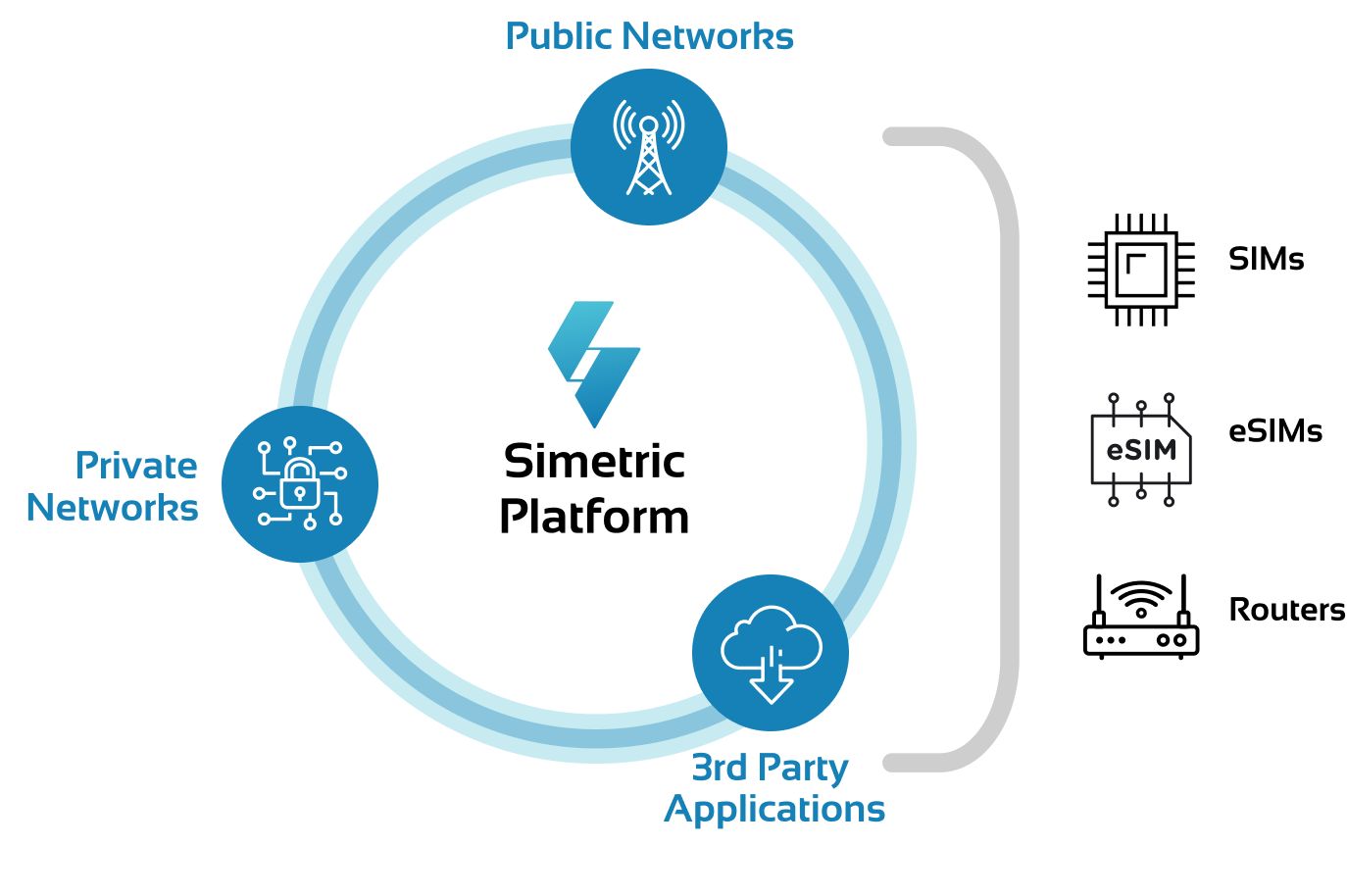
Simetric’s Distributed Networking Data Lake is built around device-level intelligence first. It consolidates telemetry across cellular, private, and satellite connectivity environments into a unified operational model aligned to lifecycle governance.
Built on Databricks and supported by hyperscaler infrastructure, the Data Lake enables enterprise-scale analytics while remaining focused on operational control. Hyperscalers provide scalable infrastructure, and networking OEMs provide telemetry, but neither typically governs lifecycle workflows across distributed device ecosystems.
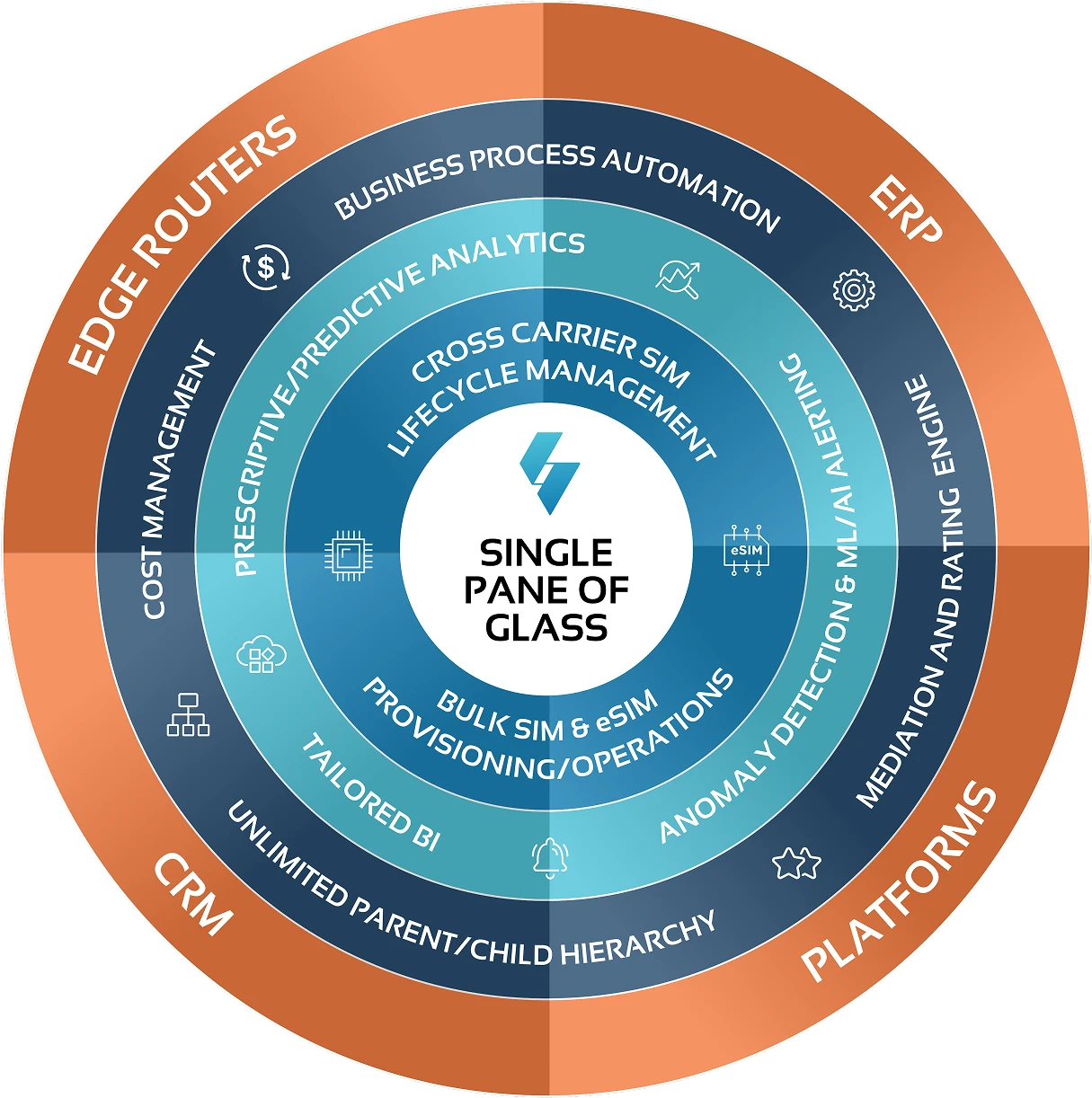
The Simetric Data Lake bridges this operational gap by transforming fragmented signals into intelligence aligned with orchestration and the Single Pane of Glass (SPoG). The result is a consistent system of operational truth rather than disconnected sources of data.
What a Distributed Networking Data Lake Means in Practice
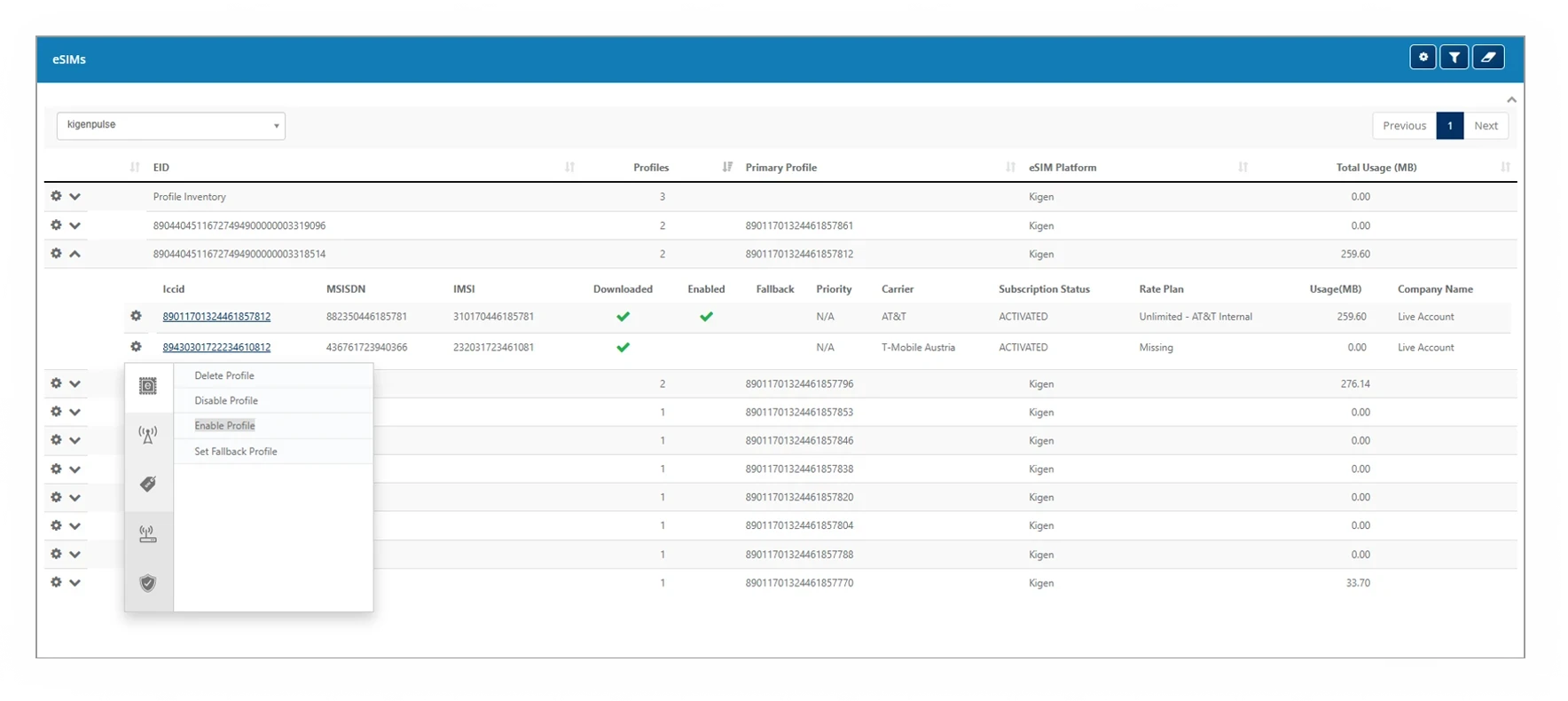
In practice, the Data Lake ingests telemetry across carriers, eSIM platforms, orchestration workflows, and enterprise integrations, then normalizes that information into lifecycle-driven models.
Normalization is critical. Without it, teams spend significant time reconciling inconsistent schemas before meaningful analysis can begin. With a consistent operational model, organizations can:
- Analyze performance and risk across regions
- Track device behavior over time
- Connect lifecycle actions to operational outcomes
- Maintain consistent historical context across environments
This approach allows enterprises to move beyond monitoring individual systems and toward understanding how distributed infrastructure behaves as a whole.
How the Simetric Data Lake Enables AI-Driven and Agentic Operations
A common data layer across distributed networks where SIM and eSIM environments live, creates the foundation for effective agentic intelligence. When lifecycle events, connectivity telemetry, and operational signals are normalized into a shared operational model, AI systems can reason across the full history of device behavior rather than isolated metrics from individual carrier systems.
This allows agentic workflows to detect patterns, recommend lifecycle actions, and automate operational decisions with greater accuracy. Instead of reacting to fragmented signals from separate connectivity platforms, organizations can build intelligent automation on top of a consistent operational record spanning carriers, networks, and device ecosystems.
IoT Data Lake in Enterprise Environments
Energy provider improving compliance readiness. A regional utility consolidates lifecycle events and connectivity telemetry into a persistent operational record. This strengthens audit readiness and supports governance aligned with regulatory frameworks.
Retail enterprise identifying hidden cost drivers. A retailer analyzes roaming patterns across terrestrial and satellite networks to improve provisioning decisions and reduce unexpected operational costs.
Automotive deployment monitoring performance trends. An automotive OEM correlates connectivity anomalies across regions to identify recurring provider issues and adjust operational policies before problems scale.
Each example reflects the same outcome: operational decisions become grounded in lifecycle intelligence rather than isolated telemetry.
Client Success in Action
Simetric gave us total visibility over 40,000 remote endpoint SIMs in 3 weeks.
VP of IT, Fortunte 500 Energy Utility
35% Reduction in Unused SIM Costs
90% Faster Anomaly Detection
How the Data Lake Powers SPoG and Orchestration
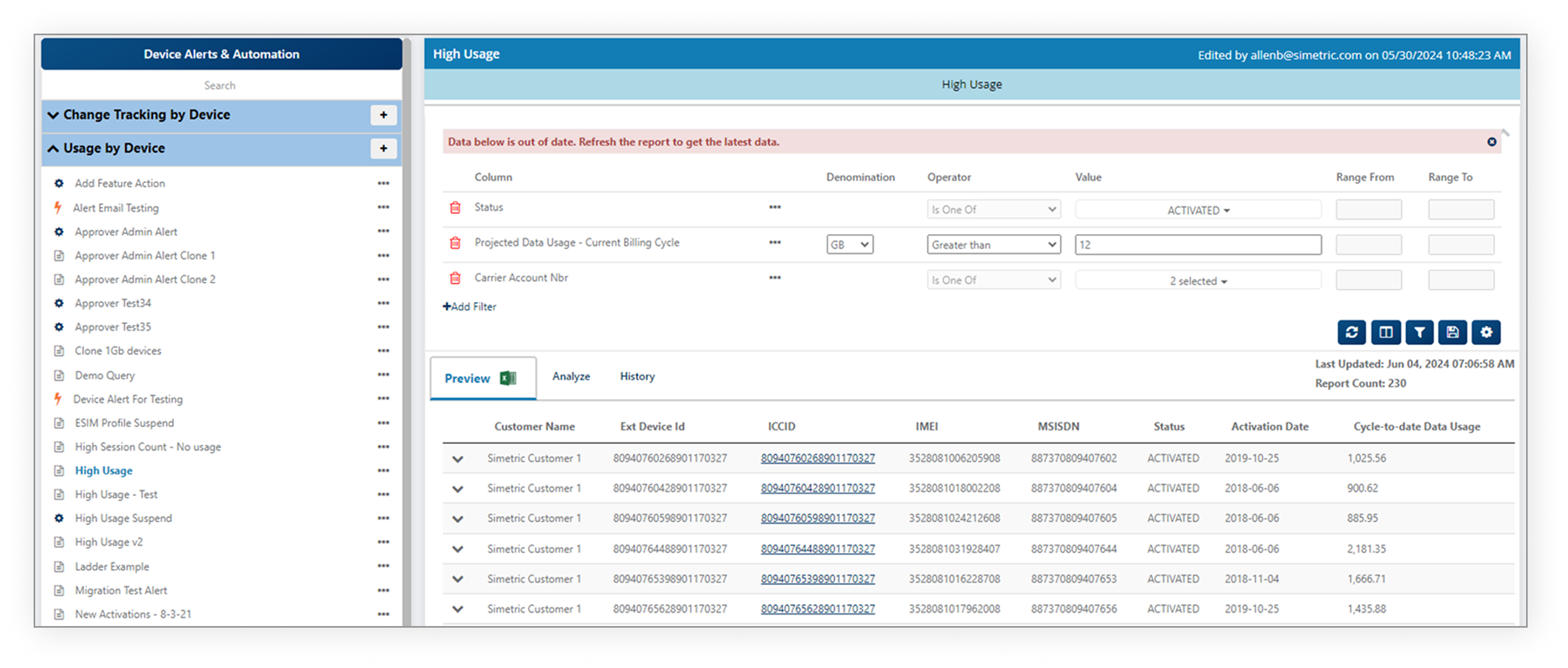
The Data Lake is foundational to delivering a true Single Pane of Glass. In Simetric’s model, SPoG represents shared operational context rather than a reporting interface.
The Data Lake provides the historical intelligence that allows SPoG to move beyond real-time visibility toward lifecycle understanding. Orchestration workflows generate events, management layers track lifecycle actions, and device telemetry supplies operational signals. The Data Lake consolidates these inputs into a consistent intelligence model aligned with the distributed networking control plane.
This ensures decisions are based on validated operational history and policy-aligned workflows, reducing blind spots across distributed environments.
Why a Data Lake Is Foundational to Distributed Networking
Distributed networking produces continuous streams of operational data. Without centralized intelligence, teams rely on partial signals and reactive troubleshooting.
The Data Lake enables a shift from monitoring toward operational understanding. Instead of reacting to isolated events, organizations can identify patterns, dependencies, and lifecycle impacts over time.
This historical context supports governance, improves coordination across teams, and reduces operational risk as deployments expand across networks, regions, and organizational boundaries.
FAQs About the IoT Data Lake
Is the Data Lake just storage?
No. It acts as an operational intelligence layer aligned to lifecycle workflows and governance, not simple storage.
How does it differ from analytics dashboards?
Dashboards typically present real-time metrics. The Data Lake provides longitudinal context that supports lifecycle analysis and operational decision-making.
Does it replace enterprise analytics platforms?
No. It complements enterprise analytics tools by providing normalized distributed networking data aligned to governance and orchestration workflows.
Who benefits most from the Data Lake?
Operations leaders, compliance teams, security stakeholders, architecture owners, and data teams managing large-scale distributed environments.
How does it support SPoG?
It provides historical intelligence that strengthens shared operational context and improves decision confidence across teams.