
Defense and Government Operations
Govern connected assets, lifecycle workflows, and mixed connectivity environments across mission-critical operations with an enterprise control layer.

Powering Global Logistics and Supply Chain Operations
Defense IoT Solutions for Mission Continuity and Operational Control
Defense and government environments rely on connected systems to support communications, monitor assets, coordinate field operations, and maintain situational awareness across regions. Simetric provides Defense IoT solutions that help organizations manage connected infrastructure through lifecycle governance, operational visibility, and an authoritative control layer at scale.
Devices operate across bases, vehicles, forward deployments, and remote infrastructure, often spanning multiple connectivity models and organizational boundaries. The objective is not simply maintaining connectivity. The objective is mission continuity. Connected assets must perform reliably, consistently, and securely under changing conditions.
That requires more than isolated tools. It requires accurate asset awareness, lifecycle governance, and shared operational understanding across distributed systems.
As deployments expand, coordination becomes more difficult. Assets remain active for long periods. Connectivity conditions shift across regions. Responsibility moves between teams, contractors, and operational units. What begins as a controlled deployment can evolve into fragmented environments that slow response times and introduce risk.
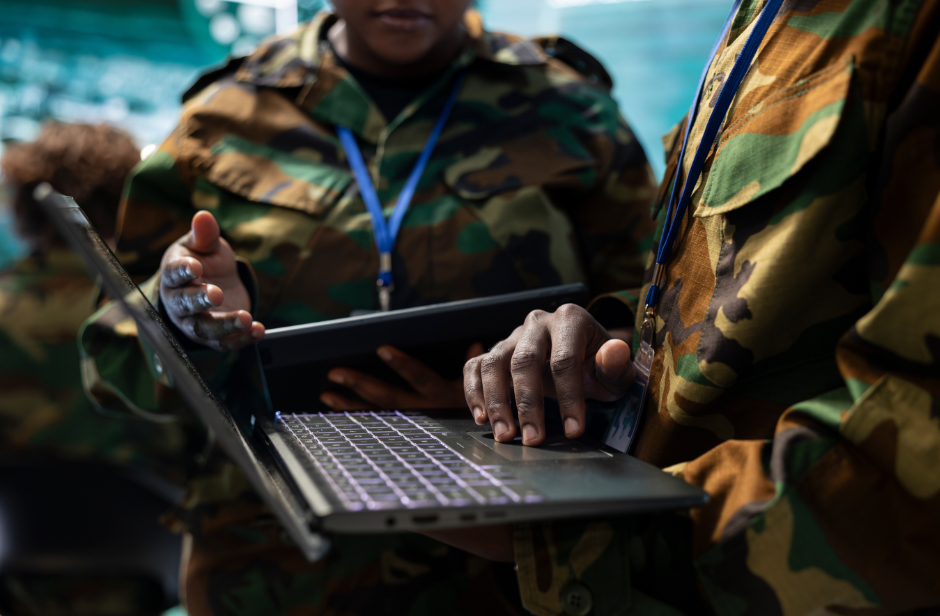

The Defense Connectivity Challenge at Scale
Defense organizations operate in environments where consistency and clarity are essential, yet increasingly difficult to maintain.
Connected assets function across regions, networks, and operational domains. Some rely on cellular infrastructure, others on satellite or private networks. Different groups manage different stages of the lifecycle, often using separate systems. Over time, this creates persistent challenges:
- Asset status becomes difficult to verify
- Changes occur without shared operational awareness
- Connectivity decisions vary between units or regions
- Historical context is fragmented or incomplete
Many existing tools were designed for stable environments. They provide partial visibility but rarely deliver a unified operational understanding across the full lifecycle of connected assets.
The result is hesitation at critical moments. Teams lack the confidence to act quickly because they cannot fully assess impact, ownership, or system state.
Single Pane of Glass (SPoG) for Defense Operations
Simetric provides a Single Pane of Glass (SPoG) that acts as an enterprise operational control plane for connected defense environments.
This is not a reporting interface. It is a shared operational context that reconciles asset identity, connectivity posture, and lifecycle state across regions, systems, and providers. Simetric’s underlying data layer normalizes telemetry, lifecycle events, and connectivity data across SIM and eSIM environments.
With this unified model, organizations can move beyond fragmented signals. Operational data becomes coherent and actionable. Analytical systems can reason over complete lifecycle context rather than isolated inputs, enabling more informed decisions and coordinated responses.
For defense organizations, SPoG supports:

Continuous Asset Visibility

Unified Team Context

Clear Device Accountability

Fewer Blind Spots
Governing the Full Lifecycle of Connected Assets
Defense assets are long-lived and operate through multiple phases, including deployment, reassignment, updates, and retirement.
Without lifecycle governance, transitions introduce risk. Assets may remain active beyond intended use. Policy enforcement can become inconsistent. Operational history may be incomplete or inaccessible when needed.
Simetric enforces policy-driven lifecycle governance across the entire operational lifespan. Changes follow standardized, traceable workflows that preserve accountability across regions, teams, and providers.
This ensures that as connected systems scale, operational consistency remains intact. Governance becomes embedded in daily operations rather than applied after issues arise.

Supporting Hybrid and Mixed Connectivity Environments
Defense operations rarely rely on a single connectivity model. Cellular, satellite, private networks, SIM, and eSIM often coexist within the same environment.
Simetric operates above these systems as a centralized control layer. It does not replace carriers or infrastructure. Instead, it provides consistent governance and operational visibility across diverse connectivity environments.
eSIM capabilities support controlled connectivity changes without requiring physical access to assets. When governed through Simetric, these changes follow defined workflows that maintain traceability and operational control.
This flexibility allows defense organizations to adapt as operational conditions shift without introducing additional complexity.

Reducing Operational Risk and Improving Decision Confidence
Simetric reduces these risks by preserving lifecycle history and maintaining a unified operational view alongside real-time conditions. Teams gain insight into not only what is happening, but also how systems reached their current state.
This enables organizations to:
- Respond more effectively to operational changes
- Understand ownership and responsibility at any point in time
- Maintain audit-ready records for compliance and review
- Reduce disruption caused by fragmented processes
Operational clarity supports mission reliability, where delays or uncertainty can carry significant consequences.


Defense Operations Built for Scale and Accountability
Defense organizations depend on structured, accountable operations across distributed systems. As connected infrastructure expands, maintaining control becomes more complex.
Simetric provides an enterprise orchestration layer that enables organizations to manage connected assets with consistency, traceability, and operational confidence. Systems can scale without sacrificing governance or introducing gaps in accountability.
As deployments grow, governance becomes the foundation that allows continued adoption without increasing operational risk.