
Managed IoT Connectivity Services for Growing Device Fleets
Full Visibility Into Your Fleet, Without Running the Platform Yourself

Running Your Connectivity Layer, So You Don't Have To
Not Every Team Wants to Run the Platform Themselves
A connectivity management platform is powerful. But it still needs someone running it. Someone has to watch for anomalies, review carrier performance, and handle the daily work of keeping thousands of IoT devices online across a global IoT footprint. For a lot of operations teams, that’s a full-time job on top of the work they were already hired to do.
IoT Analytics tracked 4.7 billion cellular connectivity connections worldwide in 2025. That’s up 13.3% year over year, inside a bigger base of connected IoT devices overall. That scale is exactly why Gartner now rates managed IoT connectivity services as their own market category, apart from the connectivity management platform itself. Enterprises aren’t just buying a management solution anymore. Many want a team that runs it for them.
How the Pattern Usually Plays Out
The pattern shows up in almost every large IoT program. A team picks a strong IoT platform, gets a pilot running, and proves the value case. Then the fleet grows past what that early plan covered. More devices. More carriers. More regions. The work to manage it all grows right along with it. Some teams scale up to meet that load. Many would rather spend their time on the product and the customer, not on running a connectivity desk.
What the Managed Layer Covers
Three things tend to matter most to teams weighing this option.
What the managed layer covers:

Device Management at Scale
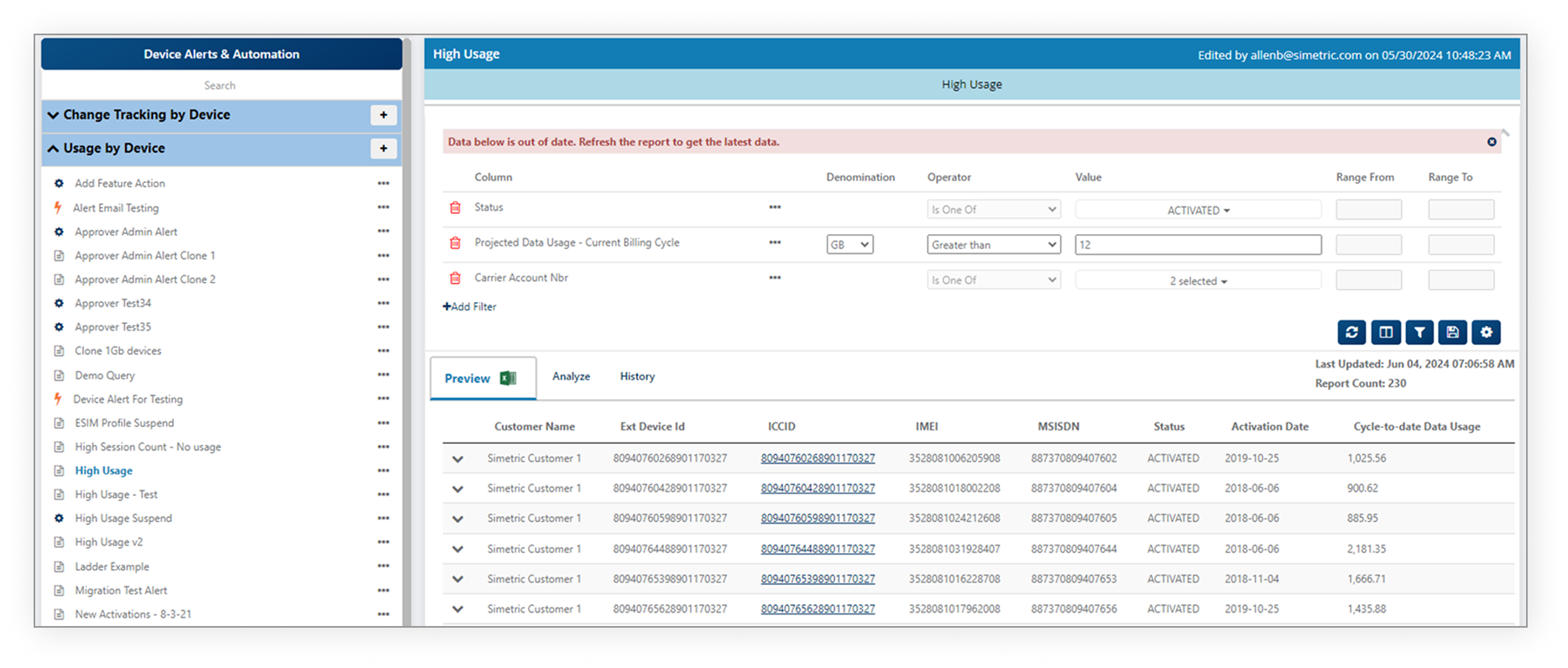
Provisioning, activating, and retiring devices handled directly, without your team tracking every SIM by hand.

Connectivity Management Across Carriers
Carrier coordination handled directly, so a global footprint behaves like one coherent system.

Support That Already Knows Your Deployment
A team that knows your fleet, setup, and history. Nobody starts from zero.
Together, these three pieces are what separates managed IoT solutions from a plain software subscription. The platform still does the normalizing and the governing. The team does the running.
Related IoT & Edge Services
Multi-Carrier IoT Management
Operational control above the carrier layer.
Explore Multi-Carrier ManagementConnectivity Management Platform
Unified control across every carrier relationship.
Explore Connectivity ManagementIoT Cost Management & Optimization
Catch rate plan drift before it shows up on the bill.
Explore Cost ManagementWhat "Managed" Actually Means With Simetric
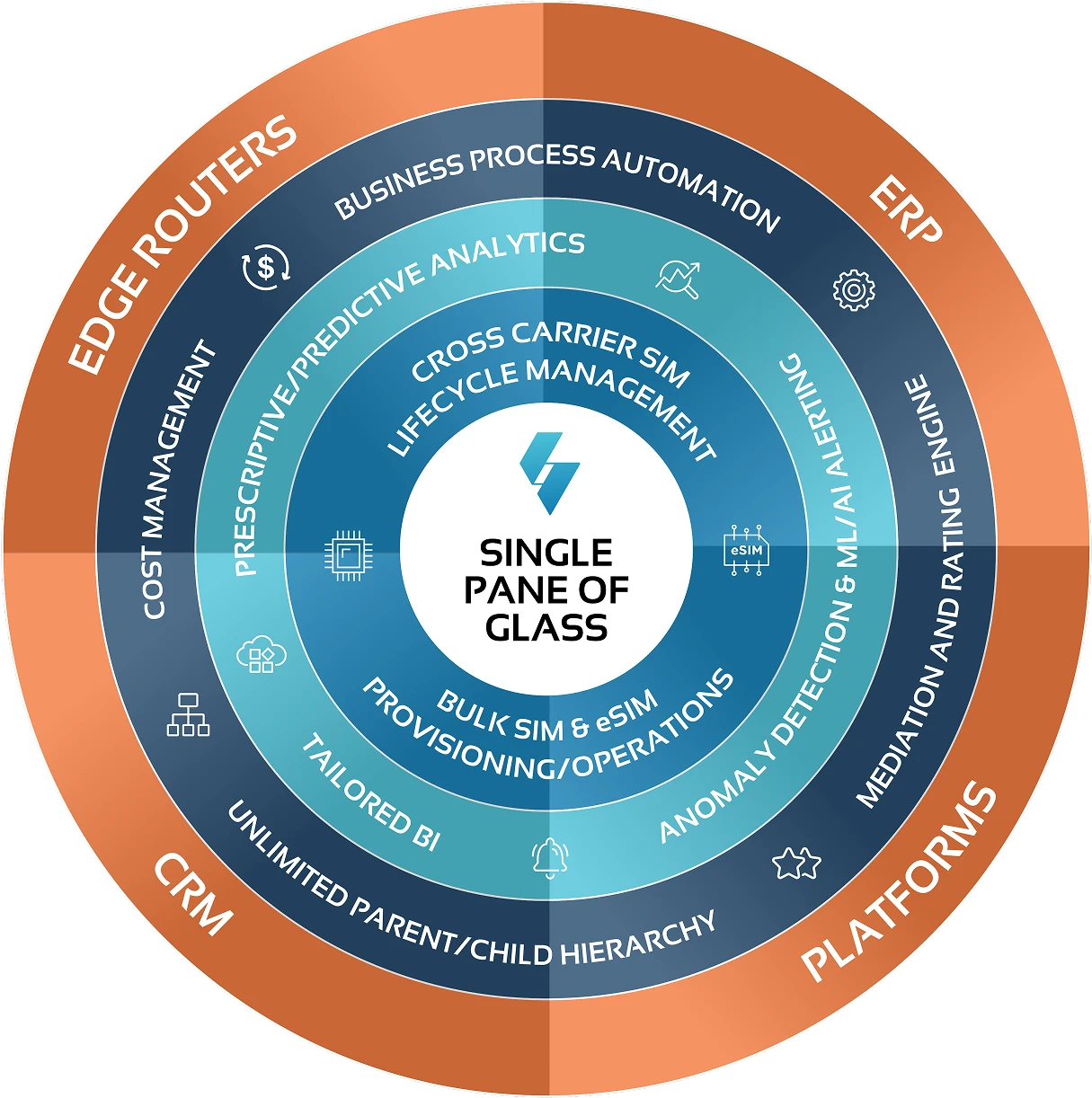
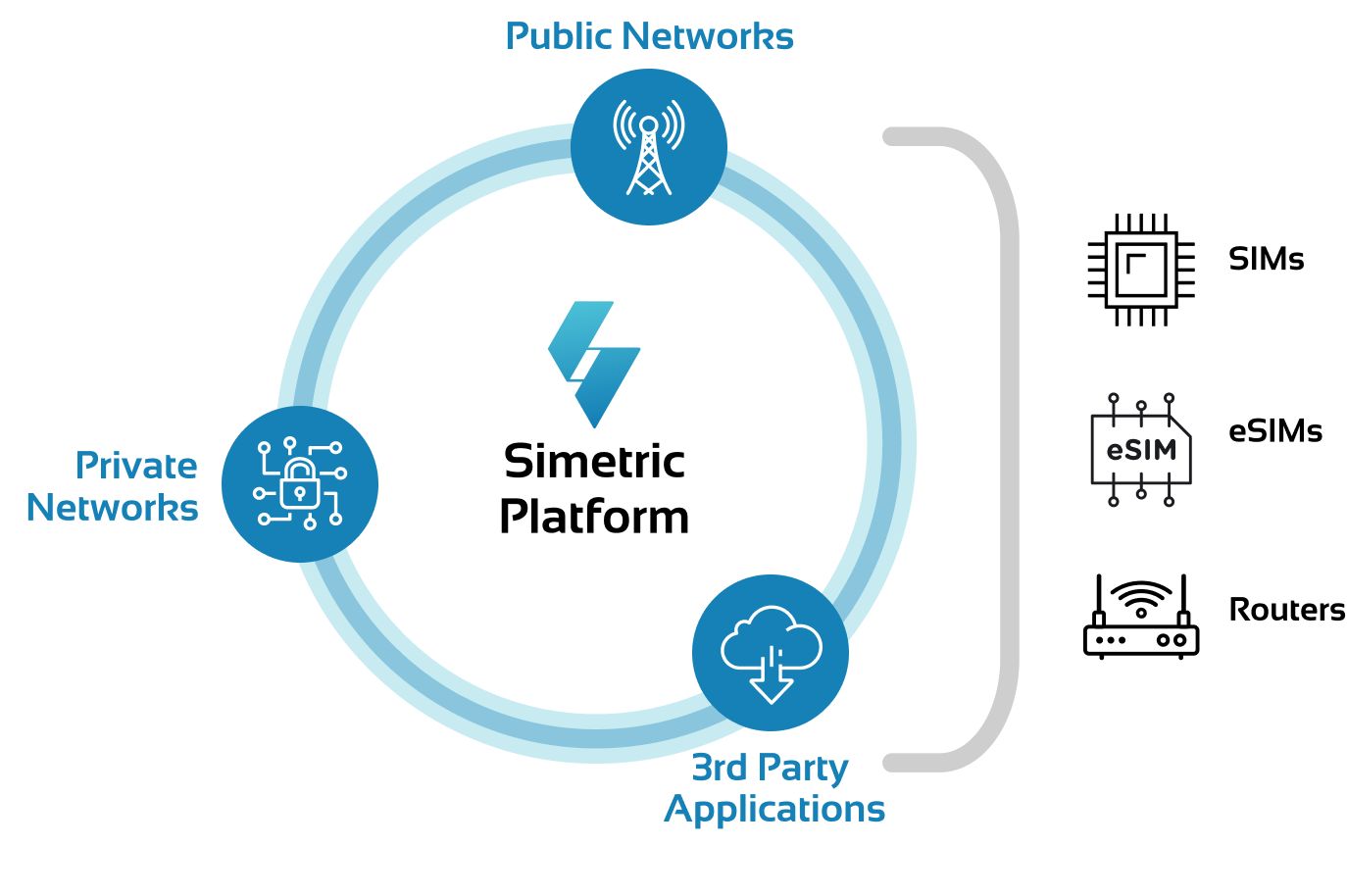
Simetric offers two ways to work with its enterprise orchestration layer, which already governs roughly 80 million SIMs across more than 300 mobile network operator integrations and 1,200+ normalized APIs. Enterprises with a strong internal team can run the platform themselves. They get full visibility and full control. Enterprises that would rather put their own staff elsewhere can add Simetric’s managed layer instead. It’s the same platform, at the same scale, paired with an operations team that handles daily device management, monitoring, and carrier coordination on the enterprise’s behalf.

The Platform and the Team, Working Together
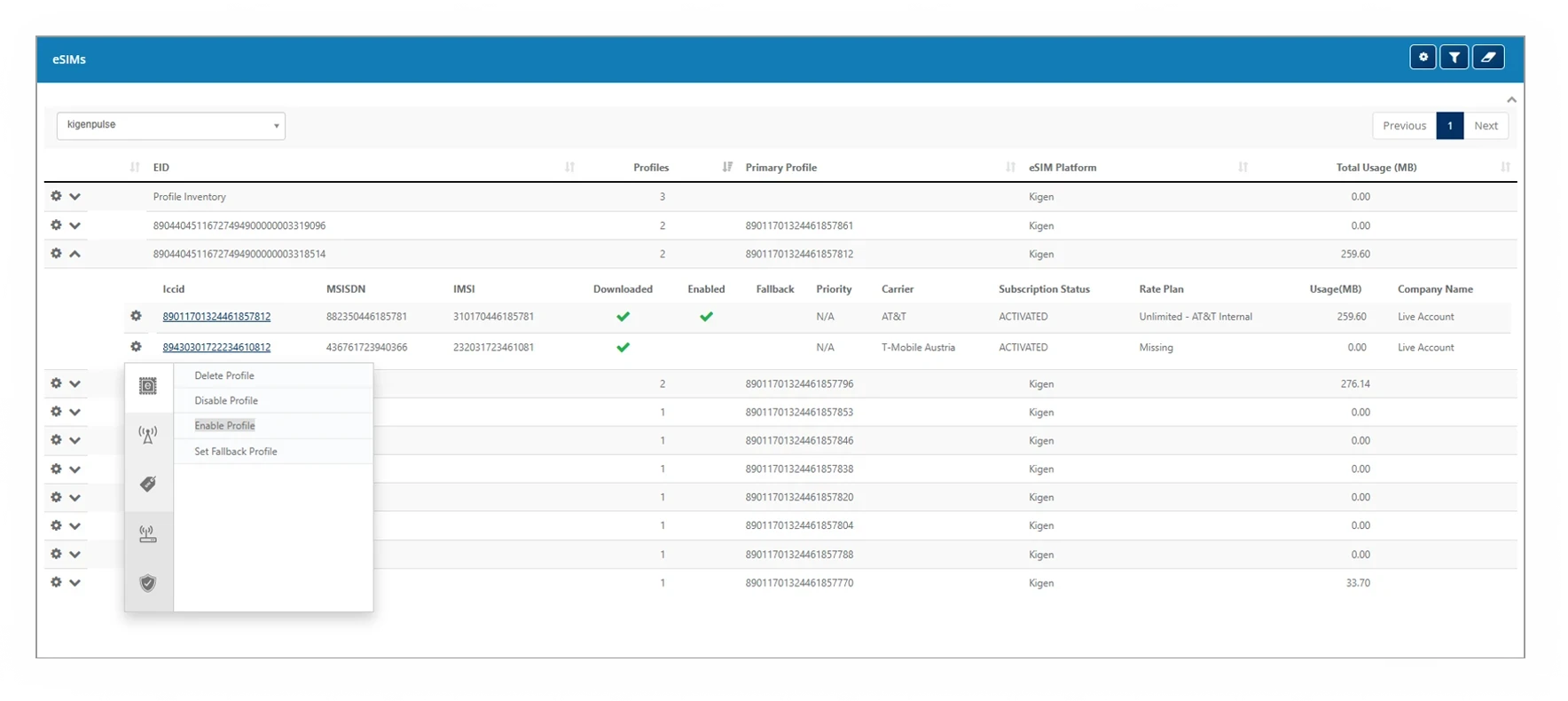
This isn’t a trade-off between a platform and a service. It’s both, working together. The managed layer doesn’t replace the platform’s visibility, it adds a team that acts on what the platform shows. That team reviews alerts, manages SIM cards and profile changes, and watches usage and performance across every carrier in the estate. Profile changes run through Simetric Validated eSIM Orchestration, so every switch follows the same validated workflow. An enterprise still sees everything happening in real time. It just doesn’t have to be the one doing all the watching, day after day, across every IoT deployment it runs.
Where This Fits Best
The managed option tends to make the most sense in a few situations. One is an enterprise scaling an IoT deployment faster than its internal team can grow to support it. Another is an organization that sees connectivity management as necessary, but not where it wants to spend engineering time. A third is any industry where downtime on a connected device carries real operational or safety weight. None of these are signs of a team doing something wrong. They’re just signs that the connectivity layer has grown into its own full-time job, and that job doesn’t have to land on people who were hired to do something else.
Seamless Connectivity, Not a Second Job
An industrial leader running thousands of sensors across several manufacturing sites is a good example. The connectivity has to work, every time. But the team running the floor usually isn’t built to also run a connectivity operations desk. Handing that layer to Simetric’s managed team keeps the device fleet reliable, without pulling plant staff away from the work only they can do. The same logic holds for a utility managing meters at scale, or a fleet operator running vehicles across several states. Anywhere connectivity has to be seamless connectivity, not a second job for a team that already has one.
Client Success in Action
Simetric gave us total visibility over 40,000 remote endpoint SIMs in 3 weeks.
VP of IT, Fortunte 500 Energy Utility
35% Reduction in Unused SIM Costs
90% Faster Anomaly Detection
Frequently Asked Questions About Managed IoT Services
What's the difference between the self-service platform and the managed option?
Both use the same underlying platform. With self-service, an enterprise’s own team runs it directly. With the managed option, Simetric’s operations team handles day-to-day device management, monitoring, and carrier coordination. The enterprise still sees everything that’s happening.
Does choosing managed services mean giving up visibility or control?
No. An enterprise using Simetric’s managed IoT connectivity services still sees the same real-time data the platform generates. The difference is who acts on it day to day, not what the enterprise can see.
Can we start with managed services and move to self-service later, or the reverse?
Yes. Both options run on the same platform, so moving between them doesn’t mean switching systems or re-provisioning devices. It’s a change in who’s operating the platform, not what the platform is.
Is this a good fit for a smaller IoT deployment, or only large fleets?
It can fit either. But the value is clearest at scale, once managing connectivity across carriers and regions starts competing with an internal team’s other work. A smaller, single-carrier setup may not need it yet.
How does Simetric's managed team handle security and compliance?
The managed layer follows the same policy-based governance as the self-service platform. Security and compliance controls aren’t lighter just because a human team is involved. Simetric’s operations team works within the same policy engine, not around it.
What happens if we outgrow a plan we set up at the start?
That’s part of what the managed team watches for. As a deployment grows past its original scope, more devices, new regions, added carriers, the team flags the gap early. Nobody has to wait for a renewal conversation to find out.
Get Seamless Connectivity Without Running It Yourself
Enterprises scaling a connected device fleet shouldn’t have to choose between visibility and bandwidth. Simetric’s managed IoT connectivity services give you the full orchestration platform, backed by a team that handles the daily work. Your own staff gets to focus on what they were actually hired to do.
Visit Simetric’s platform to see what the orchestration layer covers on its own, or see how managed services connect to cost management and optimization. Then schedule a demo to talk through which model fits your team.
Learn more: Gartner: IoT Service Providers | IoT Analytics: Cellular IoT Market Update 2026