
IoT Cost Management & Optimization for Connected Device Fleets
Catching Rate Plan Drift Before It Shows Up on the Bill

Giving Enterprises Control Over Connectivity Spend at Scale
Why IoT Connectivity Spend Is Hard to Control at Scale
A rate plan that made sense at onboarding doesn’t stay accurate forever. Usage patterns shift. Device counts grow. Nobody revisits the plan until a bill looks wrong, if it ever gets revisited at all. Now multiply that across several carriers, each billing in its own format and currency. The question should be simple: are we spending what we should be on this connected fleet? Once several carriers are involved, that question stops having a simple answer.
That question gets harder to answer as an IoT deployment scales, not easier. A rate plan that fits 10,000 IoT devices doesn’t always fit 100,000. Picture a device still provisioned for a usage pattern it no longer has, left on a rich data plan months after its workload dropped. That’s not a dramatic failure. It’s a slow leak. It’s invisible on any single carrier’s invoice, but it’s real in the total line enterprises review at renewal. Across an entire IoT network, those small leaks add up. They turn into maintenance costs and connectivity spend that nobody signed off on, because nobody could see it happening in time.
What the Pricing Data Actually Shows
IoT Analytics ran a pricing check across 150 data plans from more than 20 global mobile carriers. Average monthly cost per SIM ranged from roughly $4.98 to $7.30, depending on carrier type. In some country comparisons, the gap between the cheapest and priciest plan was far wider still.
That’s not a reason to just chase the lowest price, coverage and reliability still rule plenty of options out. But it shows pricing varies a lot across carriers and plans. Most teams can’t see that gap clearly enough, across their own fleet, to do anything about it.
What Simetric's Cost Management Layer Actually Does
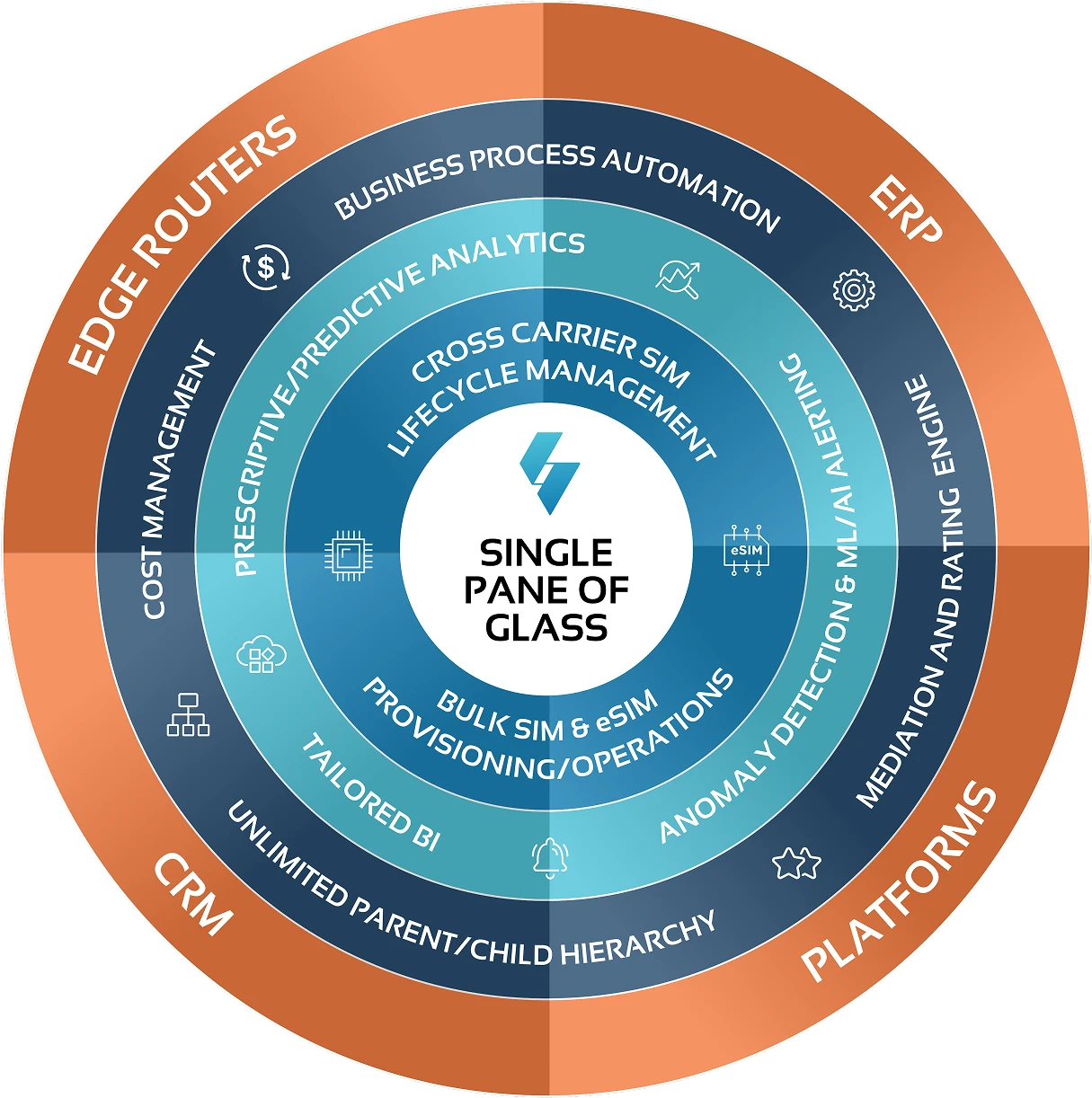
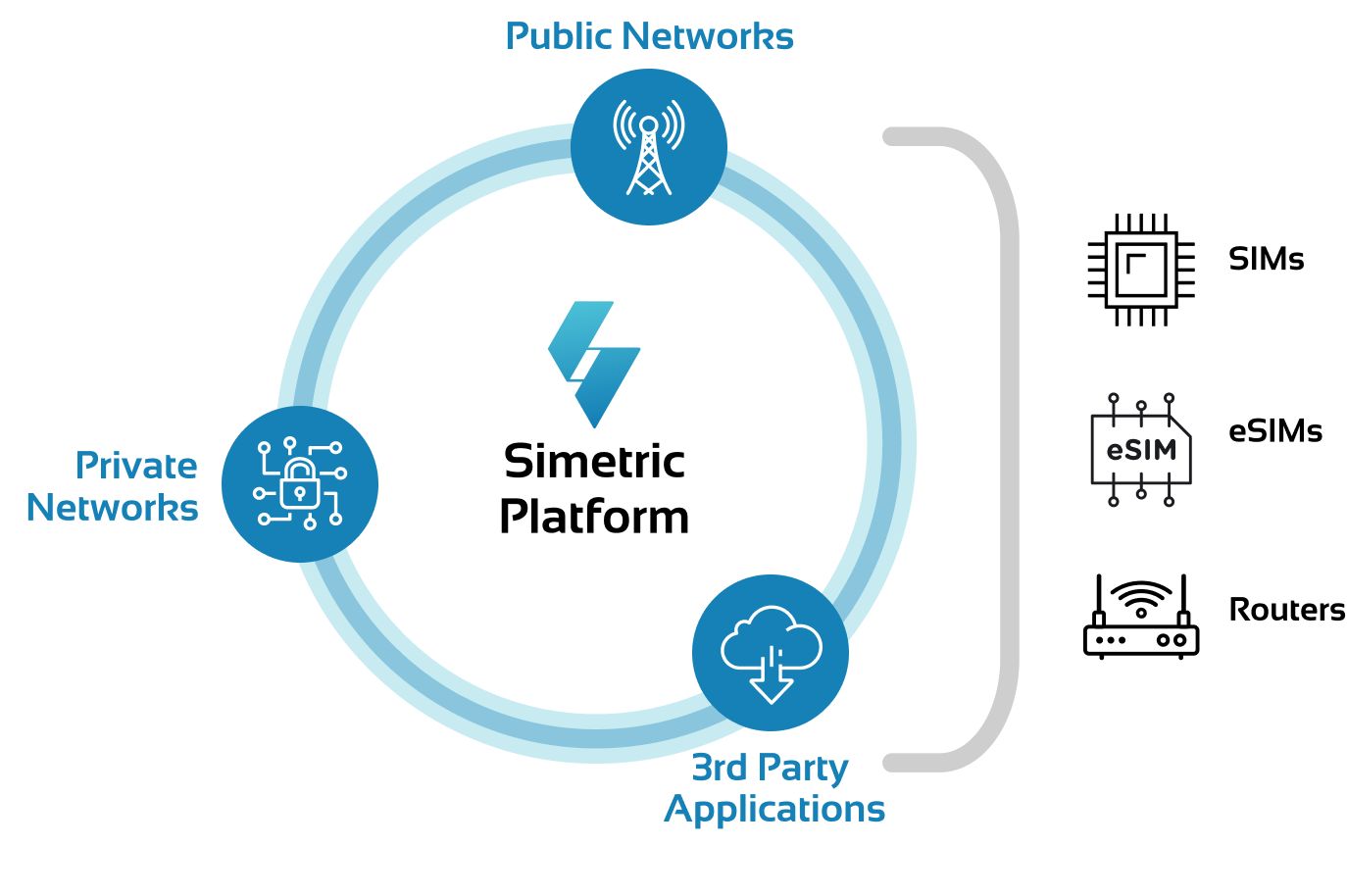
Simetric doesn’t negotiate carrier deals or set rate plans for an enterprise. Instead, it pulls together the usage and cost data every carrier is already producing, spanning roughly 80 million SIMs across more than 300 mobile network operator integrations and 1,200+ normalized APIs, into one clear view. A cost question gets one answer, not a different one from each carrier.
That one view makes three things easy to see:

Spot the Wrong Plan
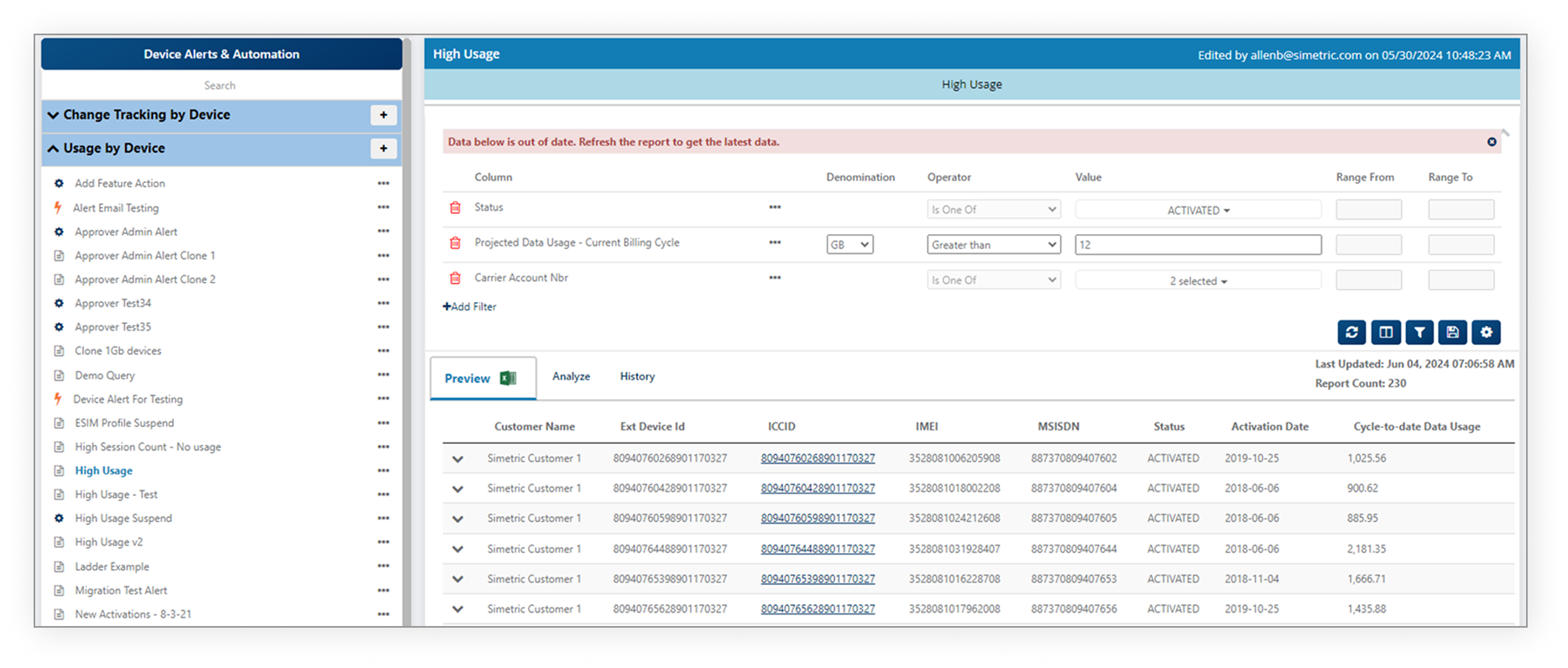
See which devices are on the wrong plan, or running over what it assumes.

Compare Cost Per Device
Compare carriers and plans for the best cost per device, with no operator bias.

Catch Overages Early
Flag devices heading toward an overage before the bill shows up.
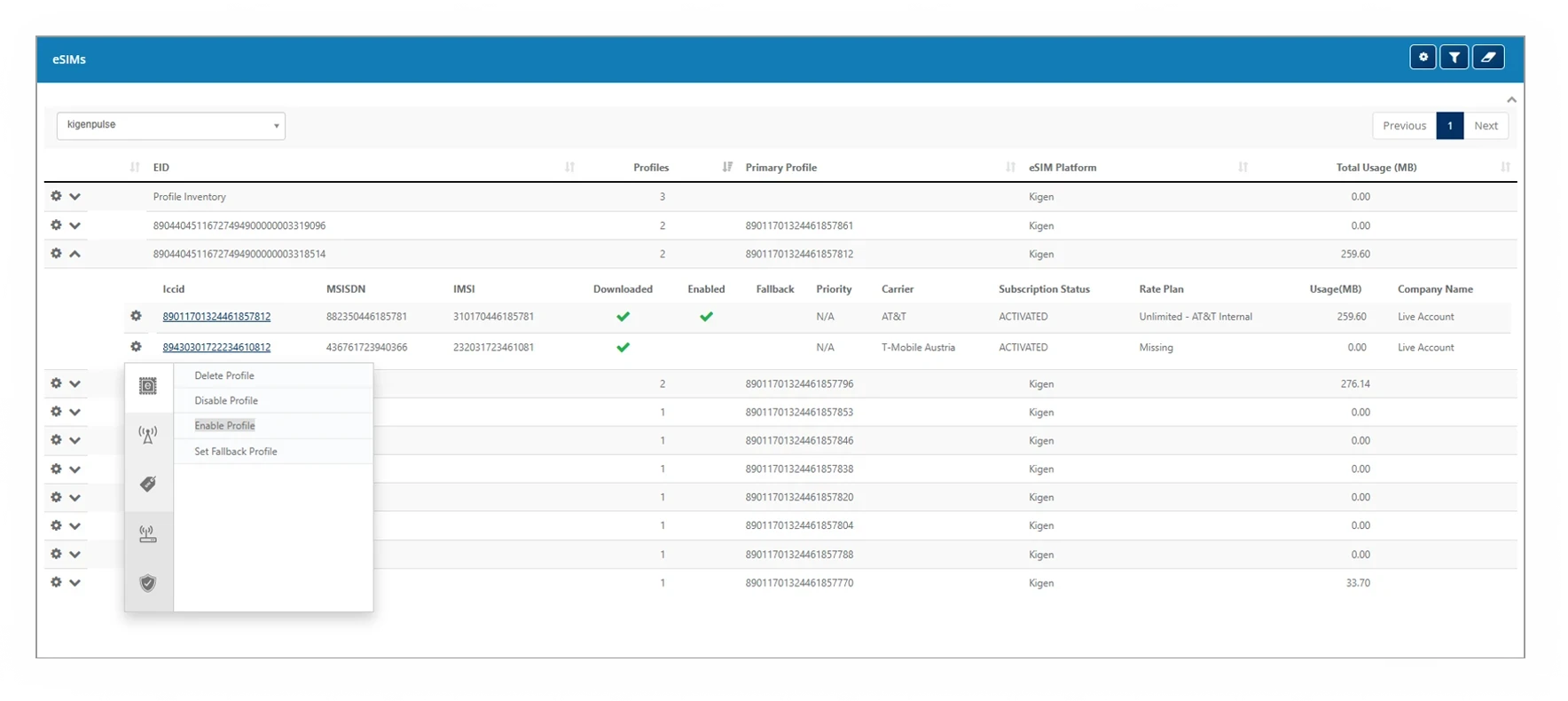
That view sits at the enterprise orchestration layer, not inside any one carrier’s system. Because of that, cost signals connect straight to the same policy engine that governs each device’s connectivity profile. When a device crosses a usage limit, that’s not just a number on a report. It’s a trigger a team can act on right away: capping usage, switching a profile, or flagging the device for review, all in one system, without waiting for the next bill. Where a profile switch is the right move, Simetric Validated eSIM Orchestration handles it as a validated, repeatable workflow.
Related IoT & Edge Services
eSIM Orchestration
Orchestrate eSIM across every carrier and eIM.
Explore eSIM OrchestrationConnectivity Management Platform
Unified control across every carrier relationship.
Explore Connectivity ManagementIoT Analytics & Reporting
One accurate view of usage, cost, health, and alerts.
Explore Analytics & ReportingRate Plan Optimization, Without Guesswork
Enterprises often don’t know a rate plan mismatch exists until renewal, when someone finally reconciles twelve months of invoices against actual usage. By then, the overspend has already happened for a year.
Simetric catches that mismatch all the time, not once a year. Say a device is still on a plan built for its old use case, but its usage pattern changed six months ago. That shows up as a flag, not a surprise at renewal. Operations teams still make the rate plan call. Simetric doesn’t make that call for them, it just makes sure the call is based on current reality, not a plan picked at onboarding and never touched again.
Built-In Proof for Finance Conversations
For an IoT developer or program owner building the case for a new IoT project, that same data is useful proof. It’s what a finance partner wants to see before approving the next IoT investment: not a guess, but a running record of what the deployment actually costs today.
Protecting IoT Investments Over the Life of the Deployment
Most IoT solution reviews focus on the cost of getting a pilot running: hardware, setup, time to market. Connectivity cost gets treated as a line item that’s set once, at launch, and never looked at again unless someone complains. That assumption breaks down right where it matters most: in long-term deployments that run for years, not months.
A smart metering program, a connected fleet, an industrial IoT rollout on a factory floor, none of these are short jobs. They’re infrastructure. And infrastructure builds up cost drift the longer it runs unwatched. Simetric’s job here is the same job it plays everywhere else: keep that drift visible instead of letting it pile up quietly over the life of the deployment. That’s especially true for cellular IoT, where usage-based billing makes drift easy to miss.
This also shapes how connectivity cost data gets used downstream. Simetric doesn’t replace an enterprise’s existing data storage or analytics stack. Normalized usage and cost data can feed into a platform like Microsoft Azure IoT Hub, or a BI tool a finance team already uses, instead of becoming one more screen to check on its own. The same discipline carries into nearby work, too. Security and compliance reporting often draws on the same clean device records. And teams building predictive maintenance models get better input when the connectivity layer feeding those models isn’t itself a source of noise or hidden cost.
Where This Matters Most
Cost visibility matters everywhere Simetric runs, but it matters most in a few specific cases. Large, long-lived device fleets, think smart metering or connected fleets, where one small overage per device adds up fast across tens of thousands of connected devices. Deployments spanning several carriers or regions, where comparing true cost per device means lining up currencies and billing formats that don’t match. And any setup where finance is asking operations to justify connectivity spend against a budget set months or years back.
In each case, the win isn’t a prettier invoice. It’s catching the mismatch or the overage trend early, while it’s still a plan adjustment, not a quarter of unexplained spend finance eventually has to ask about. It also shows that an IoT deployment runs with the same financial discipline as any other piece of enterprise infrastructure, not like some leftover Wi-Fi-era side project that nobody owns until it’s too late to fix.
Client Success in Action
Simetric gave us total visibility over 40,000 remote endpoint SIMs in 3 weeks.
VP of IT, Fortunte 500 Energy Utility
35% Reduction in Unused SIM Costs
90% Faster Anomaly Detection
IoT Cost Management Frequently Asked Questions
Does Simetric negotiate carrier rates or set pricing on our behalf?
No. Simetric normalizes usage and cost data across your carriers so your team can see rate plan mismatches and overage risk clearly. Carrier negotiations and plan selection stay your team’s decisions. Simetric makes sure those decisions are based on current, accurate data.
How is this different from the billing reports our carriers already send us?
Carrier billing only covers that carrier’s own plans and format. Carrier portals report on their own network. Simetric is the platform that governs all of them. Simetric normalizes usage and cost across every carrier in your estate into one consistent view. Comparing cost per device across your whole fleet doesn’t require reconciling several incompatible invoices by hand.
What triggers an overage alert?
A policy-triggered alert fires when a device’s usage trends toward or crosses a threshold set for its plan, before the overage shows up on an invoice. That alert is tied to the same policy engine governing the device’s connectivity profile, so a team can act on it right away instead of discovering it at billing time.
Can this work across multiple carriers and regions at once?
Yes. Normalizing cost and usage data across carriers, regions, and plan structures is the core of what this layer does. A global, multi-carrier IoT network gets one consistent cost picture instead of a separate report per market.
Can connectivity cost data feed our existing analytics or cloud platform?
Yes. Simetric exposes normalized usage and cost data through standard integration paths. It can feed a platform like Azure IoT Hub, an internal data storage system, or a BI tool your team already uses, instead of becoming another isolated screen to check on its own.
Does this replace our finance or procurement team's role in managing connectivity spend?
No. Simetric gives finance and operations teams the visibility to make informed decisions about rate plans, carrier mix, and budget. It doesn’t replace the commercial decisions those teams are responsible for.
See What Your Connectivity Estate Actually Costs
Stop waiting for renewal to find out a rate plan stopped fitting a device’s actual usage eleven months ago. Simetric normalizes usage, cost, and overage risk across your entire connected estate into one accurate, continuously updated view, so the cost saving case you made for the deployment still holds up a year in. An IoT solution built to save money shouldn’t quietly start costing more than it should.
Visit Simetric’s platform to see the cost management layer in context, or see how it connects to the broader analytics and reporting layer it shares a policy engine with. Then schedule a demo to see it against your own carrier mix and current spend.
Learn more: IoT Analytics: Benchmarking IoT Mobile Operator Pricing