
Build vs. Buy: IoT Connectivity Platform Decision Framework
A practical framework for deciding whether to build your own connectivity layer or buy one built for it.
See What a Purpose-Built Orchestration Layer Looks Like
The Build vs. Buy Question
CTOs and IoT architects eventually face the same question: build the connectivity management layer in-house, or buy a platform built for it. Both paths work. Neither is free of tradeoffs. The right call depends on scale, timeline, and what your team is actually equipped to maintain for years, not just launch.
This isn’t a simple cost comparison. Building gives you full control over the stack. Buying gives you speed and someone else’s carrier relationships. It’s also the more common path: 70-80% of enterprise software is purchased off-the-shelf rather than custom-built. The decision framework below is built to help you weigh both honestly.
What “Build” Actually Means for an IoT Connectivity Platform
Building an IoT connectivity platform means more than writing code to talk to one carrier’s API. It means managing SIM and eSIM provisioning across every carrier you use, handling failover when a network drops, maintaining compliance with standards like GSMA SGP.32, and keeping security controls current as threats evolve.
None of that is a one-time build. Carriers change their APIs. Standards get updated. New regions bring new regulatory requirements. A connectivity platform isn’t a feature you ship once. It’s infrastructure your team owns for as long as the product exists.
Build vs. Buy at a Glance
| Factor | Build In-House | Buy a Platform |
|---|---|---|
| Time to deployment | Months to years | Weeks |
| Ongoing maintenance | Owned entirely by your team | Handled by the platform vendor |
| Carrier relationships | Negotiated and managed individually | Already established across 300+ operators |
| Compliance updates | Tracked and implemented internally | Maintained as part of the platform |
| Multi-carrier failover | Built and tested from scratch | Built into the platform |
| Integration breadth | Limited to what the team has time to build | Pre-built across cellular, satellite, and SD-WAN routers |
| Best fit | Core IP, small or single-carrier deployments | Multi-carrier, multi-region, or scaling deployments |
Four Questions to Ask Before You Build
A few questions tend to separate the enterprises that should build from the ones that should buy.
Start with:

Carrier & Region Scope
How many carriers and regions does the deployment span today, and where is it headed in three years?

In-House Expertise
Does your team have in-house expertise in telecom protocols, SIM lifecycle management, and connectivity security?

Compliance Ownership
Who owns ongoing compliance as standards like GSMA SGP.32 evolve?

Total Cost of Ownership
What’s the total cost of ownership over five years, not just the cost to reach a working prototype?
Related Reading
eSIM Orchestration
Orchestrate eSIM across every carrier and eIM.
Explore eSIM OrchestrationConnectivity Management Platform
Unified control across every carrier relationship.
Explore Connectivity ManagementSingle Pane of Glass (SPoG) Management
One unified view across devices and carriers.
Explore SPoG ManagementThe Hidden Costs of Building In-House
The visible cost of building is engineering time. The hidden costs show up later, and they’re usually bigger.
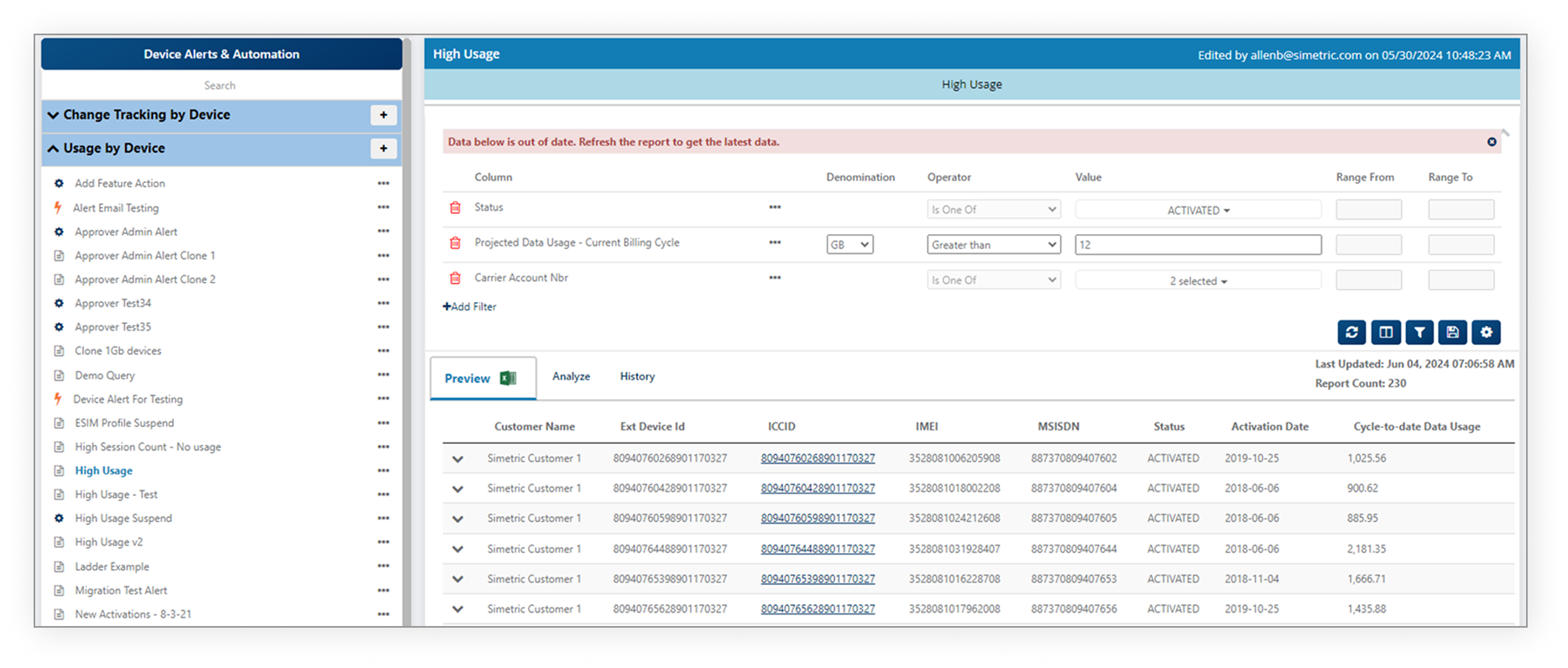
Maintaining carrier integrations requires ongoing attention as APIs change and new carriers get added. Industry benchmarks put ongoing maintenance at roughly 25% of the initial build cost annually, for as long as the platform is in service. Security and compliance work doesn’t stop after launch. It’s a continuous obligation as standards evolve and new vulnerabilities surface.
And the team that builds the platform becomes the team that has to keep supporting it, often pulling engineers away from the product work that actually differentiates your business. A platform vendor absorbs carrier market shifts as part of the product. An internal team absorbs them as unplanned work.
Forrester’s own research on build versus buy decisions has found some clients swinging back toward building in certain cases, as low-code tools and cloud services lower the cost of custom development. That’s a fair point, and it applies to plenty of software categories. But IoT connectivity orchestration carries a different kind of complexity: carrier relationships, telecom regulation, and hardware standards don’t get simpler just because your development tools got better. And the risk isn’t only cost: research shows nearly two-thirds of internal software development projects fail outright.
When Building Actually Makes Sense
Building isn’t always the wrong call. It tends to make sense when connectivity itself is core intellectual property, not supporting infrastructure. It also fits smaller, single-carrier, single-region deployments where the operational complexity a platform solves for simply doesn’t apply yet.
If your deployment stays small and stays put, a lighter internal solution can work fine. The calculation changes once you’re managing multiple carriers, multiple regions, or a device count that makes manual oversight impractical.
A Decision Framework: Questions to Ask Before You Build
A few questions tend to separate the enterprises that should build from the ones that should buy.
How many carriers and regions does the deployment span today, and where is it headed in three years? Does your team have in-house expertise in telecom protocols, SIM lifecycle management, and connectivity security, not just general software engineering? Who owns ongoing compliance as standards like GSMA SGP.32 evolve? And what’s the total cost of ownership over five years, not just the cost to reach a working prototype?
IoT Analytics’ research on IoT solution development found that preference for a pure buy-and-integrate approach dropped from 50% to 28% of organizations in recent years, as more teams shift toward hybrid models that combine a purchased platform with custom application logic on top. That hybrid pattern is often the realistic middle ground: buy the connectivity orchestration layer, build the parts of the product that are actually unique to your business. Simetric’s 1,200+ normalized APIs and native ServiceNow integration give teams a foundation to build on, so custom work goes into product logic instead of carrier plumbing.
How Simetric Fits Into the Build vs. Buy Decision
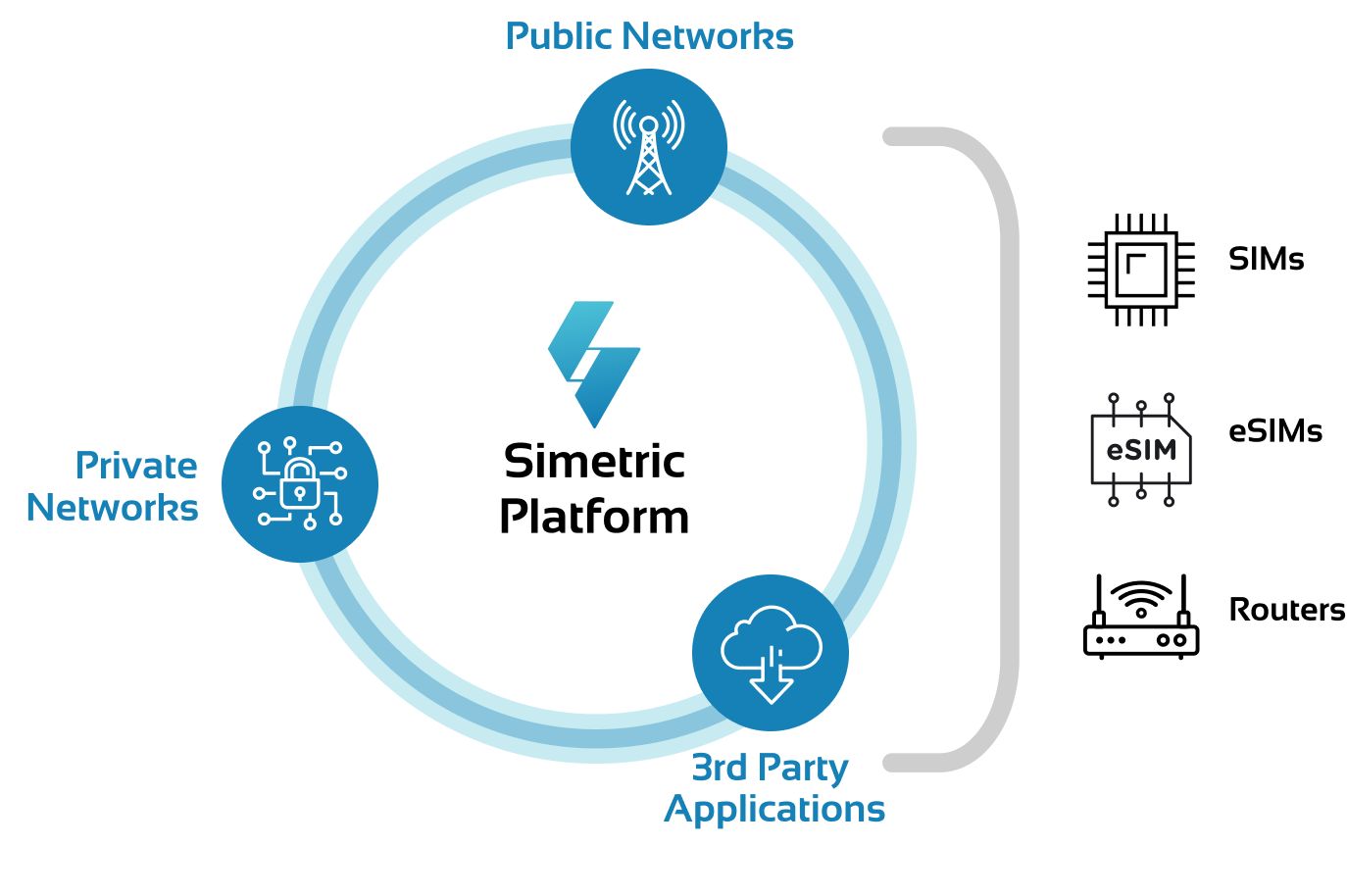
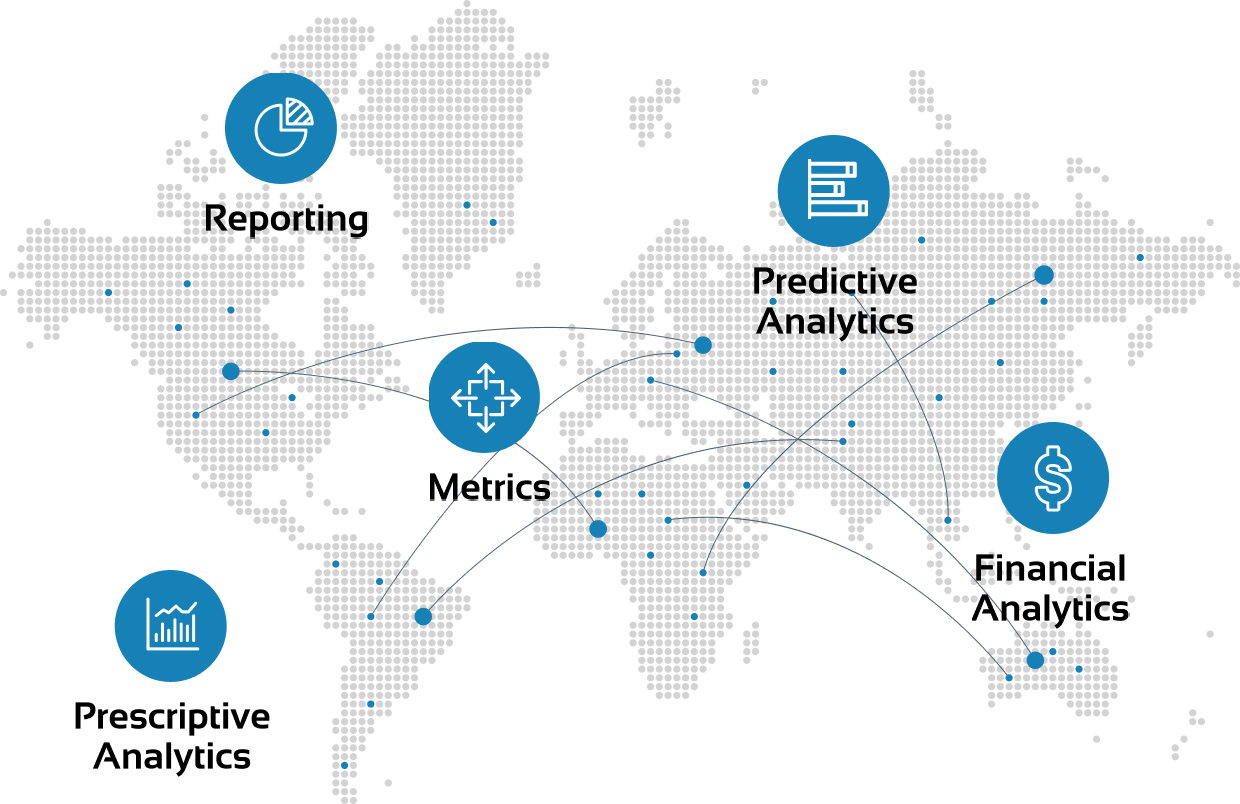
Simetric isn’t asking enterprises to buy instead of building everything. It’s the connectivity orchestration layer that handles the part of the stack that rarely differentiates a product: multi-carrier management, SIM and eSIM lifecycle, failover, and compliance. That’s work Simetric has already done: approximately 80 million SIMs managed across more than 300 mobile network operator integrations and 1,200+ normalized APIs.
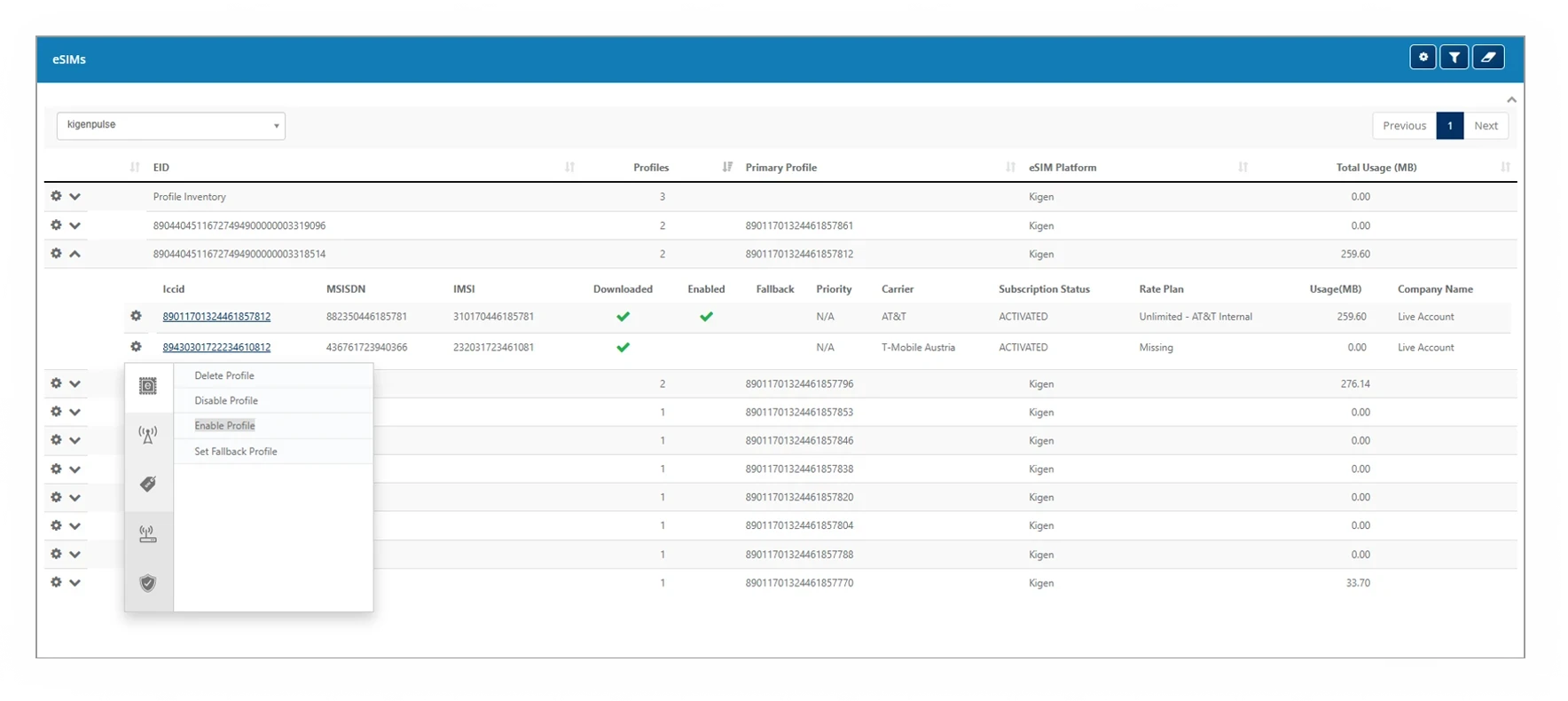
For eSIM specifically, Simetric Validated eSIM Orchestration covers the GSMA SGP.32 profile work that’s hardest to build and keep current in-house. That’s backed by five years of focused R&D and three patents in IoT connectivity management, depth an internal team would take years to match. Simetric’s platform governs that layer so enterprises can direct engineering time toward the application and product work that actually sets them apart. Buying from a single carrier trades one constraint for another. Carrier portals manage their own network. Simetric is the carrier-agnostic platform that governs all of them.
For teams weighing this decision, our enterprise IoT platform guide lays out what a modern orchestration layer needs to cover, useful reference whether you end up building, buying, or landing on a hybrid approach.

Client Success in Action
Simetric gave us total visibility over 40,000 remote endpoint SIMs in 3 weeks.
VP of IT, Fortunte 500 Energy Utility
35% Reduction in Unused SIM Costs
90% Faster Anomaly Detection
Build vs Buy: Frequently Asked Questions
Is it ever cheaper to build an IoT connectivity platform in-house?
It can be, for small, single-carrier deployments with no near-term plans to scale. The economics shift once you’re managing multiple carriers, regions, or a device count large enough that manual oversight becomes impractical.
What’s the highest hidden cost of building in-house?
Ongoing maintenance. Carrier APIs change, security standards evolve, and compliance requirements shift. The team that builds the platform ends up owning all of that indefinitely, often at the expense of product work.
Does buying a platform mean giving up control?
Not necessarily. Most enterprises land on a hybrid model: buy the connectivity orchestration layer and build the application logic that’s actually specific to the product.
How long does it typically take to build a connectivity platform versus buying one?
Building typically takes months to years, depending on scope and carrier count. Buying a platform can get an enterprise running in weeks, since the carrier integrations and compliance work are already in place.