
Device Productivity, Security, and the Future of IoT
At Mobile World Congress 2026, Simetric Chief Revenue Officer Matt Coleman joined industry analyst Jim Morrish for a discussion on the evolving architecture of IoT management and why enterprises are shifting from connectivity-centric platforms to device-centric operational models.
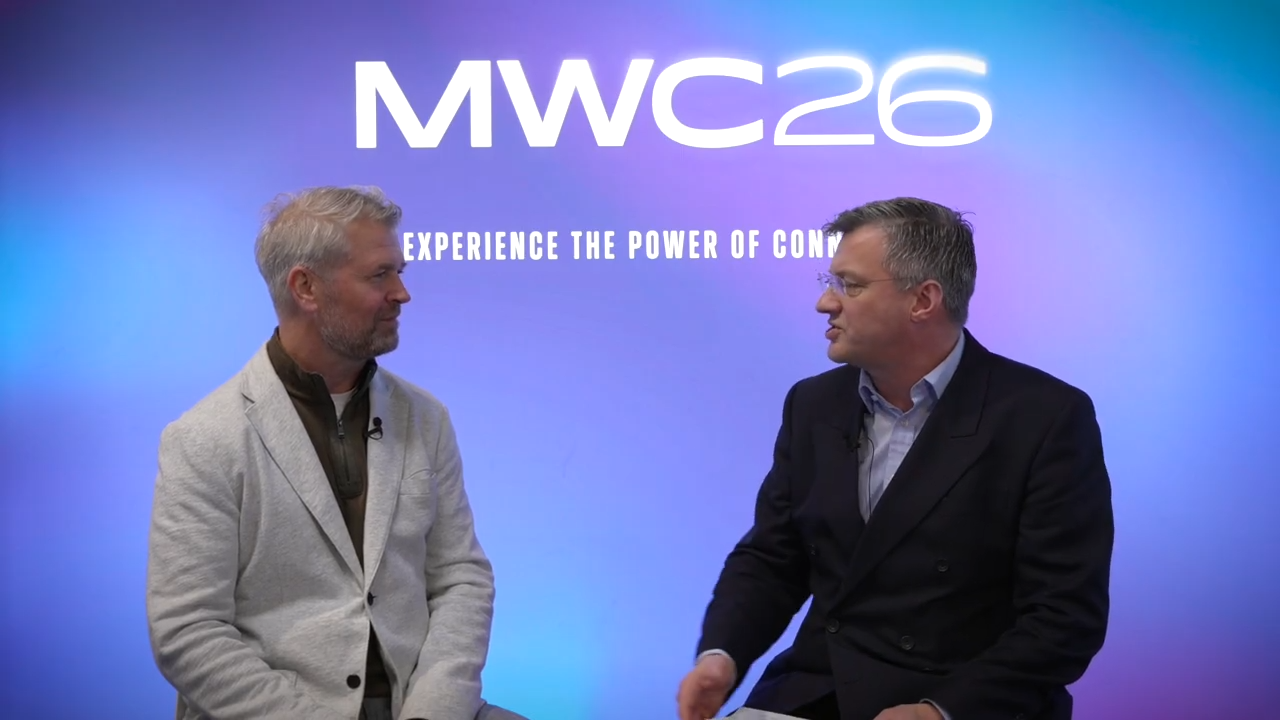 “Connectivity tells you that a device is online,” Coleman explained. “What enterprises ultimately care about is whether the device is actually doing its job. That means discovering the device, understanding its behavior, and managing its productivity.”
This device-centric approach forms the foundation of Simetric’s vision for a true Single Pane of Glass for distributed device environments. Rather than limiting visibility to network connections, the platform provides enterprises with a unified operational view across devices, connectivity, traffic behavior, and operational workflows.
The discussion also highlighted two recent announcements that expand Simetric’s platform capabilities.
Through a new collaboration with Thales Group, Simetric is extending device security deeper into connected environments. Thales’ expertise in device-level identity and security complements Simetric’s visibility and orchestration platform, allowing organizations to apply stronger security controls directly at the device layer.
Simetric also recently announced work with Skylo Technologies to expand device management capabilities into non-terrestrial networks (NTN). As satellite connectivity becomes increasingly integrated into IoT deployments, Simetric’s platform enables organizations to manage devices consistently across both terrestrial and satellite networks.
Looking ahead, Coleman noted that the next phase of IoT management will be driven by data and artificial intelligence.
 During the conversation, Coleman outlined how Simetric is approaching IoT management differently from traditional telecom-based platforms. While many tools in the market focus primarily on connectivity management—tracking SIMs, data usage, and carrier relationships—Simetric’s platform is designed to begin with device discovery and operational visibility.
“With a unified data layer that understands devices, connectivity, and behavior,” Coleman said, “organizations can begin applying AI-driven automation to detect anomalies, trigger workflows, and improve operational productivity across their entire device ecosystem.”
The conversation reflects a broader shift occurring across the industry: IoT deployments are increasingly being treated not simply as connectivity projects, but as distributed networks of devices that must be discovered, secured, and operated at scale.
Watch the full conversation from the Mobile World Congress floor below.
Mobile World Congress 2026 Interview
Jim Morrish and Matt Coleman (Speaker 2), Chief Revenue Officer, Simetric
Jim Morrish: Matt Coleman, Chief Revenue Officer of Simetric, we are here on the floor of Mobile World Congress 2026. As ever, it’s an extremely busy event.
You are with a company called Simetric. Tell me a little about Simetric, what motivates you, and what are you trying to achieve?
Matt Coleman: First of all, Jim, great to see you again. A pleasure as always.
Simetric, if you look at it from our background, typically a lot of companies in our industry have telecom backgrounds. What’s interesting is Simetric came out of a number of people like myself came from networking. I came from Palo Alto, Cisco Systems. So we’re approaching the market from a different perspective, not from a connectivity perspective, but from a networking perspective. And that’s what makes Simetric unique, both from an industry and from an origins perspective.
 JM: You’ve really promoted and introduced the market that this concept of a single pane glass and elevated discussion around that. But there are other single pane concepts of single pane glass around and, and other vendors who, who offer things that they call single pane of glass. So, are all these things the same, or is there a differential between these different propositions?
MC: Certainly. I think one of the things that, again, going back to where we came from before is that some of what you’re seeing from people using the term single pane of glass are looking at it strictly from a connectivity management perspective. And really, we use connectivity as an opportunity to do audit for device discovery and understanding of what that inventory looks like.
And then we use it to actually look at it from a device perspective and not strictly just from a connectivity management perspective, because what we care about at the end of the day in IoT is device productivity. And that’s what single pane of the glass for us is, is to discover the device, understand its connectivity, and then get to the device productivity, which is what we’re focused on, right.
JM: So it’s very device centric and that’s kind of unlike really the way the telecoms industry has approached your connectivity and device management thus far. One other thing I noticed recently that you made an announcement about Thales. Can you tell me a little bit more about that?
MC: Yeah, so I think what we’re seeing is there’s obviously a lot of discussions around GSMA.32, what people are doing, what the process is. With the Thales announcement, again, going back to the device productivity piece, and you look at what Thales brings to the table with their background and security with them to be able to be all the way down that the device itself.
You look at where we’re at as a platform where we’re discovering the devices, understanding them, we can look at the traffic, what’s happening from the traffic perspective, so we understand anomalous traffic or changes. And then they can actually be down at the device level and apply a security layer on that. So really the combination of the two of our platforms together really extends beyond just doing a device productivity view, but apply another layer of security on top of it.
JM: So it is device visibility, management orchestration, underpinned by strong security.
MC: A hundred percent.
JM: So if you take another perspective, because there’s another announcement I noticed of yours. So if you go from devices on the ground to things in space – there was something with Skylo wasn’t there?
MC: Correct. We, we also had another announcement with Skylo. We’re very, very pleased with. Simetric has always been kind of the bimodal world where we’re looking at all the different types of devices, the monitor, what carrier or network they’re on, and that’s expanded now into the NTN network.
And what we really are seeing is that as customers shift from typical terrestrial style and then looking at NTN type of deployments, this is further expanding that. And so we’re allowing our customers, regardless of where they’re deploying, regardless of the connectivity is available, we can provide the ability to manage, discover, and, provide that level of device productivity that you’re looking for.
JM: So there’s some significant changes you’ve described. You’ve moved from connection centric to device centric. We’ve enhanced security of devices on the ground. We’ve got some very clear transparency through to what’s happening on those devices and we’ve incorporated space as well. So, so what else is gonna happen in 2026? What else is going to impact the industry and how are things going change after that, do you think?
MC: I think, as I’m sure you’ve seen as I have, is the word AI is everywhere. So I think one of the things that people are looking at is with all of this device information, we have a mountain of data. And so what we really are seeing is people asking for, enterprises asking for a common data plan, common data database of all the things relevant to their device.
And in order for them to be able to really provide a successful and deep agentic deployment, once we have a common data platform, with all of that information, we can actually provide deep levels of agentic deployments that provide real levels of, you know, leapfrogs and productivity, and enhancements in what they see from a device perspective.
JM: And do you see that it ushering in an opportunity for new players to enter the market where you offer and support that data environment and then welcome in an ecosystem to deploy those agenda agents?
MC: We’ve certainly seen a lot of new players in the industry, as I’m sure you have. There’s, for example, ServiceNow we’re seeing in the IoT world, they’ve made a significant acquisition. From an OT perspective, we’re going see players like that where they’re actually going to say, okay, hey, we have all these devices out there. How are we gonna integrate them into workflows? How are we gonna take advantage of all these new AI tools that we have? So we’ll see some of the traditional IT players that’ll come into this IoT world that we haven’t seen before.
JM: Do you think there’s gonna be new types, other categories of player coming in?
MC: Certainly, if you look beyond security and data, the amounts are limitless. But I think once you see the larger enterprise platforms, what enterprises are asking for is for their traditional enterprise platform to be able to play on the IT world, which is certainly not new to us, but a bit of a shift.
JM: Excellent. Well, it’s been fantastic. Thank you for sharing your views. It’s been a very interesting view into some things that are really going on, you know, right in the heart of connectivity and management of that connectivity and how it’s positioned for end users and adopters. So that’s been really, really, really interesting. So, Matt Coleman of Simetric, thank you very much for joining me.
MC: Thanks Jim. Pleasure to be here today and we’ll see you again soon.